

Introduction: The Shift to Sustainable Food Service Packaging
In the competitive landscape of the global food service industry, packaging is no longer just a vessel for transporting goods; it is a critical component of brand identity and environmental responsibility. As regulations tighten regarding single-use plastics and consumer preferences shift toward eco-friendly solutions, the demand for custom biobased packaging bags has surged. For wholesale buyers—ranging from restaurant chains and coffee roasters to food distributors—sourcing high-quality, printable, and functional biobased bags is a strategic priority.
Biobased packaging offers a viable alternative to traditional fossil-fuel-based plastics, utilizing renewable resources such as corn starch, sugarcane, and PLA (Polylactic Acid). However, transitioning to biobased materials requires a deep understanding of technical specifications, barrier properties, and manufacturing capabilities. Unlike standard polyethylene, biobased materials behave differently under heat, stress, and printing processes.
This comprehensive guide is designed for procurement officers, operations managers, and brand owners looking to navigate the complexities of the biobased packaging bag market. We will explore material science, customization options, printing technologies, and the essential factors to consider when placing wholesale orders.
1. Defining Biobased Packaging in the Food Sector
What Does “Biobased” Actually Mean?
The term “biobased” refers to materials that are derived, wholly or in part, from biomass resources. These resources are renewable and can include agricultural crops, forestry residues, and plant-based waste. It is crucial for buyers to distinguish between “biobased” (source of material) and “biodegradable” or “compostable” (end-of-life behavior), although many biobased bags possess both attributes.
For food packaging, the most common biobased materials include:
- PLA (Polylactic Acid): Derived from fermented plant starch (usually corn or sugarcane). It offers excellent clarity and rigidity, making it ideal for windows in bread bags or standalone pouches.
- PBAT (Polybutylene Adipate Terephthalate): Often blended with PLA or starch to add flexibility and toughness. It is a copolymer that helps bags stretch without tearing.
- Starch Blends: Thermoplastic starch (TPS) is often mixed with other biodegradable polyesters to create a material that feels similar to traditional plastic but has a lower carbon footprint.
- Cellulose Films: Derived from wood pulp, these films provide good gas barrier properties and are often used in laminates.
Why Choose Biobased for Food Packaging?
The primary driver is sustainability, but there are functional benefits as well. High-quality biobased films are engineered to provide breathability, which is essential for certain fresh produce and bakery items to prevent condensation and mold growth. Furthermore, utilizing food packaging bags made from renewable resources aligns your brand with global sustainability goals, a key selling point for modern consumers.
2. Technical Specifications & Material Performance
When ordering wholesale, vague requests lead to poor results. You must define the technical parameters of your packaging to ensure it survives the supply chain.
Barrier Properties: Grease, Moisture, and Oxygen
Biobased materials naturally have different barrier properties compared to conventional plastics. If you are packaging oily foods (like pastries or fried snacks) or moisture-sensitive goods (like coffee or dried fruit), you need specific coatings or multi-layer structures.
- Grease Resistance: Standard bio-films may need a grease-resistant coating or a specific lamination to prevent oil soak-through. Ask your supplier about the “Kit Level” of grease resistance required for your specific food product.
- Moisture Vapor Transmission Rate (MVTR): For crispy products, you need a low MVTR to keep moisture out. PLA has a moderate barrier, so high-barrier applications often require metallized bio-films or specific high-barrier coatings.
- Oxygen Transmission Rate (OTR): Critical for preventing oxidation in nuts and coffee. Biobased laminates can be engineered to match the OTR of traditional plastics.
Thickness and Tensile Strength
Thickness is measured in microns or mils. Biobased materials can sometimes be more brittle or less elastic than LDPE (Low-Density Polyethylene). Therefore, you might need a slightly thicker gauge to achieve the same puncture resistance.
- Light Duty (20-40 microns): Suitable for lightweight bakery items, produce, or inner liners.
- Medium Duty (50-80 microns): Ideal for retail pouches, frozen food bags, and general snacks.
- Heavy Duty (90+ microns): Required for large volumes, heavy bulk items, or stand-up pouches that need significant structural integrity.
3. Printing Technologies for Biobased Bags
A custom biobased packaging bag is a marketing tool. The printing quality reflects your brand’s professionalism. However, printing on bio-films requires expertise, as these materials are sensitive to heat and tension.
Rotogravure Printing
Rotogravure is the standard for high-volume, high-quality packaging. It involves engraving the image onto a cylinder.
Pros: Exceptional color consistency, high definition, capable of complex gradients and photo-realistic images. Cost-effective for very large runs.
Cons: High initial setup costs (cylinder plates) and higher Minimum Order Quantities (MOQs).
Flexographic Printing
Flexography uses flexible relief plates. It is widely used for surface printing on paper/bio-plastic hybrids.
Pros: Lower tooling costs than rotogravure, good for medium runs, supports water-based inks which are more eco-friendly.
Cons: Slightly lower resolution than rotogravure, though modern HD flexo is closing the gap.
Digital Printing
For short runs, prototypes, or multiple SKU variations, digital printing is gaining traction.
Pros: No plate costs, low MOQs, quick turnaround, easy to change designs.
Cons: Higher per-unit cost for long runs; limited spot color matching (Pantone) compared to analog methods.
Ink Considerations
To maintain the eco-friendly integrity of the package, specify soy-based or water-based inks. Ensure that the inks are certified for food contact safety and do not interfere with the compostability of the final product (if applicable).
4. Customization Options: Designing for Functionality
Beyond the print, the physical structure of the bag must suit the product.
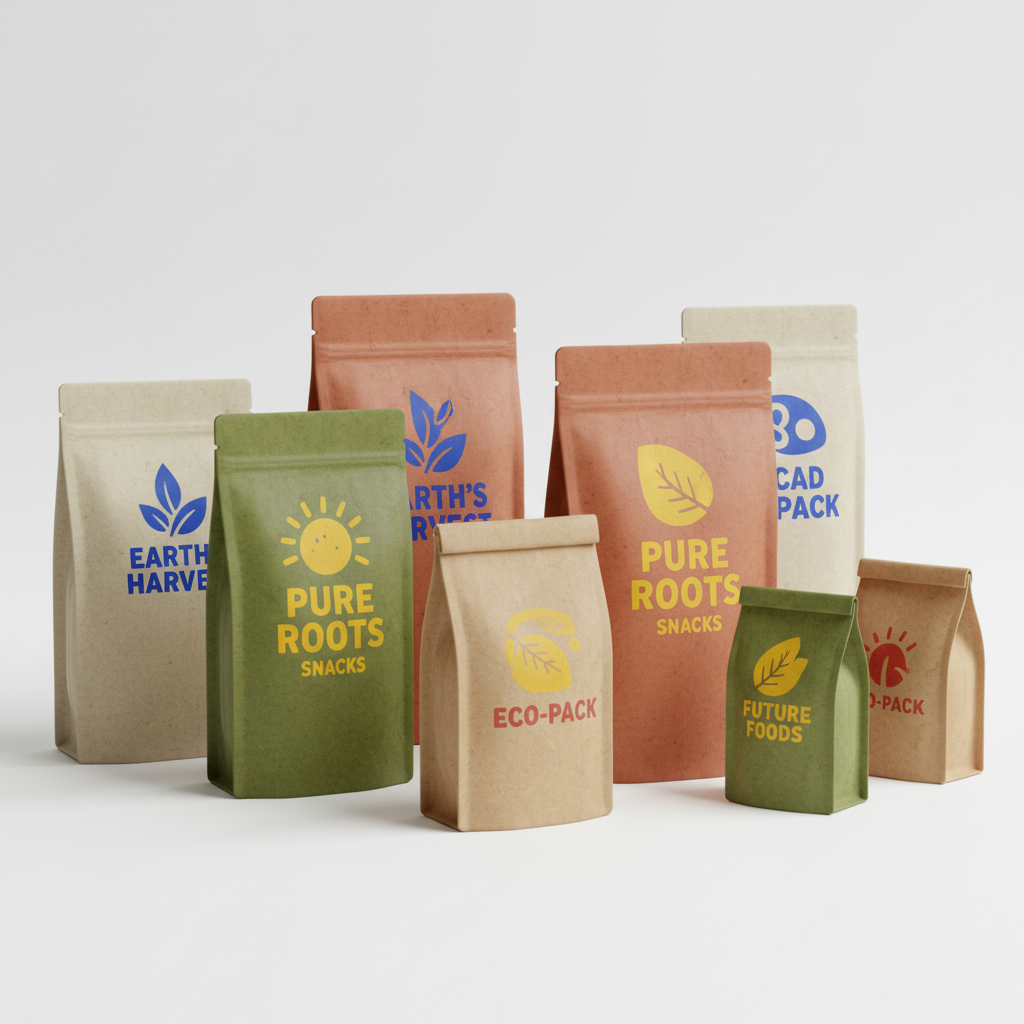
Bag Styles
- Stand-Up Pouches (Doypack): Excellent shelf presence. Requires a strong bottom gusset, often made from a laminated bio-structure for stability.
- Flat Bottom Bags (Box Pouch): Offers maximum volume and stability. Popular for coffee and pet food.
- Side Gusset Bags: Traditional style for coffee and tea. Expands to hold volume but usually requires a tin tie or tape for reclosing.
- Three-Side Seal Bags: Flat pouches used for small servings, jerky, or samples.
Functional Features
- Resealable Zippers: Essential for multi-serving products. Ensure the zipper material is also biobased or compatible with the bag’s disposal stream.
- Tear Notches: Laser-scored or mechanically cut notches for easy opening.
- Hang Holes: Euro or round holes for retail peg display.
- Clear Windows: Using high-clarity PLA to create a window in a paper-based bag allows consumers to see the product, boosting trust and sales.
- Valves: One-way degassing valves are critical for fresh roasted coffee to release CO2 without letting oxygen in. Biobased valves are becoming available but check availability with your manufacturer.
5. Wholesale Ordering Guide: From Quote to Delivery
Navigating the procurement process for custom packaging involves several steps. Here is a checklist to streamline your experience.
Step 1: Define Your Requirements
Before you request a quote, gather the following data:
– Product to be packaged: Weight, volume, state (frozen, dry, oily).
– Bag Style & Dimensions: Width x Height + Gusset.
– Material Preference: Fully biobased, paper/bio hybrid, etc.
– Printing Specs: Number of colors, coverage area, matte or glossy finish.
– Quantity: Estimated volume per SKU.
Step 2: Understanding MOQs
Biobased materials are often extruded to order. Consequently, MOQs for custom sizes and prints can be higher than stock items.
– Digital Print: Low MOQs (often 500-1,000 units).
– Rotogravure/Flexo: Higher MOQs (typically 10,000 to 30,000+ units depending on bag size) due to setup efficiency and material waste during calibration.
Step 3: Artwork & Prototyping
Submit artwork in vector formats (AI, PDF, EPS). Ask for a digital proof first. For large orders, requesting a physical pre-production sample is highly recommended to verify material feel and color accuracy.
Step 4: Lead Times
Manufacturing custom biobased bags involves extrusion, printing, lamination, curing, and bag making.
– Standard Lead Time: 3-6 weeks after artwork approval.
– Shipping: Factor in sea freight transit times for international wholesale orders.
6. Storage and Handling of Biobased Inventory
Unlike conventional plastics which can sit in a warehouse for decades, biobased materials are designed to degrade under certain conditions. This is a feature, not a bug, but it requires inventory management.
- Shelf Life: Most biobased bags have a shelf life of 12-18 months before mechanical properties begin to degrade.
- Storage Conditions: Store in a cool, dry place away from direct sunlight and heat sources. High humidity and heat can accelerate premature breakdown.
- FIFO (First-In, First-Out): Implement strict inventory rotation to ensure bags are used while fresh.
7. Common Mistakes to Avoid
1. Ignoring the “Food Grade” Certification: Not all bio-plastics are food safe. Ensure your supplier provides FDA or EU food contact compliance documentation.
2. Overlooking Heat Sealing Specs: Biobased films often have lower melting points than PE/PET. You may need to adjust the temperature and dwell time on your filling and sealing machinery to avoid burning the bag or creating weak seals.
3. Assuming All Biobased is Compostable: While related, they are not identical. If your marketing claim is “Home Compostable,” ensure the material is certified for that specific environment, as industrial composting requires higher temperatures.
8. Cost Analysis: Value vs. Price
Biobased packaging typically commands a premium over fossil-based plastics due to raw material costs and processing complexity. However, the value proposition includes:
– Brand Loyalty: Customers are willing to pay more for sustainable brands.
– Regulatory Compliance: avoiding potential future taxes on virgin plastics.
– Market Differentiation: Standing out on the shelf.
When comparing quotes, look at the total landed cost, but also consider the marketing value the packaging adds to your product.
9. Frequently Asked Questions (FAQ)
Q1: Are biobased packaging bags as strong as regular plastic bags?
Yes, when engineered correctly. While the raw material might have different tensile properties, manufacturers adjust the thickness and blend of materials (like combining PLA with PBAT) to ensure the bags meet the necessary strength requirements for their intended load.
Q2: Can I freeze food in biobased bags?
Many biobased materials are suitable for freezer applications, but you must specify this requirement. Standard PLA can become brittle at freezing temperatures, so a specific blend or co-extrusion is used to maintain flexibility in the cold chain.
Q3: What happens if I store these bags for too long?
If stored beyond their recommended shelf life (usually 12+ months) or in poor conditions (high heat/humidity), the material may begin to weaken, become brittle, or lose seal strength. Always ask for the recommended storage parameters.
Q4: Can you print full-color photos on biobased bags?
Absolutely. Using rotogravure or high-quality flexo printing, we can achieve photo-realistic results on biobased films. The surface treatment of the film ensures good ink adhesion.
Q5: Is custom sizing available for biobased bags?
Yes, custom sizing is a standard part of the wholesale process. You can specify the exact width, height, and gusset depth to fit your product perfectly, reducing material waste and shipping volume.
Q6: How do I know if the bag is food safe?
Reputable manufacturers will provide documentation proving compliance with food safety standards (such as FDA 21 CFR or EU No 10/2011). Always verify that both the film and the inks used are food-grade.
Conclusion
Switching to custom biobased packaging bags is a powerful move for any food service business looking to future-proof its operations and appeal to eco-conscious consumers. By understanding the nuances of material specs, printing options, and proper storage, you can ensure a smooth transition that enhances your brand image without compromising on quality.
At YBJ Packing, we specialize in helping businesses navigate these choices with high-quality, customizable solutions tailored to the food industry. Whether you need high-barrier coffee pouches or transparent bakery bags, our team is ready to assist with engineering the perfect package.
Ready to elevate your packaging? Contact our team today to discuss your project or request a sample kit to see our quality firsthand.