

Introduction: The Critical Role of High-Performance Freezer Packaging
In the competitive landscape of the food service and processing industries, product integrity is paramount. For procurement managers, restaurant chains, and food distributors, the humble plastic freezer bag is not merely a consumable; it is a critical component of inventory management, food safety, and brand presentation. Choosing the wrong specification can lead to freezer burn, product spoilage, ruptured packaging during transport, and ultimately, significant financial loss.
Unlike standard polyethylene bags used for room-temperature storage, commercial-grade freezer bags are engineered to withstand sub-zero temperatures without becoming brittle or cracking. They must maintain seal integrity under the stress of expansion as liquids freeze, and they often serve as the primary barrier against oxygen and moisture, which are the main culprits of freezer burn.
Furthermore, in a B2B context, packaging is a marketing vehicle. Custom plastic freezer bags allow brands to display logo, nutritional data, and cooking instructions directly on the package, ensuring brand visibility from the warehouse to the commercial kitchen.
This comprehensive guide explores the technical aspects of selecting the right freezer bags for your operation. We will cover material science, thickness requirements, printing technologies, and how to navigate the wholesale buying process effectively.
1. Material Science: What Makes a Bag "Freezer Grade"?
Not all plastic bags are created equal. The distinction between a standard storage bag and a freezer-grade bag lies in the resin blend and the additives used during extrusion. Understanding these materials helps buyers make informed decisions that balance cost with performance.
Low-Density Polyethylene (LDPE)
LDPE is the industry standard for many frozen food applications. Its molecular structure features long, branching chains which prevent the molecules from packing too closely together. This results in a material that is highly flexible, clear, and resistant to impact.
Why it works for freezing: LDPE retains its flexibility at very low temperatures. While other plastics might shatter if dropped when frozen, LDPE absorbs the shock. It is an excellent choice for bulk storage of vegetables, breads, and meats.
Linear Low-Density Polyethylene (LLDPE)
LLDPE is often blended with LDPE to enhance performance. It provides superior puncture resistance and tensile strength compared to standard LDPE. For items with sharp edges—such as bone-in meat cuts or frozen shellfish—bags containing an LLDPE blend are essential to prevent punctures that would compromise the vacuum or seal.
Metallocene Polyethylene (mPE)
For high-performance applications, Metallocene PE offers exceptional seal strength and clarity. It is often used in co-extruded films (multi-layer films) to create thinner bags that are just as strong as thicker, mono-layer alternatives. This can be a sustainable choice, reducing the total amount of plastic used per unit.
EVA Additives (Ethylene Vinyl Acetate)
To further improve cold-crack resistance, manufacturers often add EVA to the polyethylene blend. EVA lowers the seal initiation temperature and increases the elasticity of the bag at deep-freeze temperatures (below -18°C / 0°F). This is particularly important for blast freezing operations where rapid temperature drops occur.
Food Safety Compliance
Regardless of the specific blend, all food packaging bags intended for direct contact must meet strict food-grade standards. This means the resin must be virgin (non-recycled) material to ensure no contaminants migrate into the food. Buyers should always request confirmation that materials are FDA or EU food-contact compliant.
2. Technical Specifications: Thickness and Dimensions
Specifying the correct size and gauge (thickness) is crucial for cost control and product protection. Over-specifying results in unnecessary waste, while under-specifying leads to breakage.
Understanding Gauge (Thickness)
Thickness is typically measured in mils (thousandths of an inch) or microns. Here is a general guide for freezer applications:
- 1.5 – 2 Mil (38 – 50 Microns): Suitable for light-duty freezing, such as baked goods, fruits, or short-term storage where the product is not heavy or sharp.
- 2 – 3 Mil (50 – 75 Microns): The standard for general food service. Good for vegetables, boneless meats, and prepared sauces. Offers decent moisture barrier properties.
- 4 Mil+ (100+ Microns): Heavy-duty. Essential for bone-in meats, large bulk quantities (e.g., 10kg blocks), or long-term storage where preventing freezer burn is critical. The thicker barrier significantly slows down moisture transmission.
Sizing and Capacity
When calculating the required bag size, consider the volume of the product and the method of closure.
- Flat Dimensions: Width x Length. Remember that a flat bag does not have side gussets, so the product will pull the sides in, reducing the effective width.
- Gusseted Bags: Width x Depth (Gusset) x Length. These are ideal for box liners or bulky items, as the gusset allows the bag to square out at the bottom.
- Seal Area: Always account for 1-2 inches of extra length if you are heat sealing the bag, or more if you are using a twist tie or clip.
3. Styles and Closure Options
The operational flow of your packing line dictates the style of bag needed.
Loose / Flat Bags
Packed in cases, these are grabbed manually. They are the most economical option and are versatile for various manual packing stations in restaurants or butcher shops.
Wicketed Bags
These bags are stacked on a wire bracket (wicket). They are designed for semi-automatic or fully automatic packing machines. A blower opens the bag, the product is inserted, and the bag is torn off the wicket. This is high-efficiency packaging for bakeries and poultry processors.
Zipper / Reclosable Bags
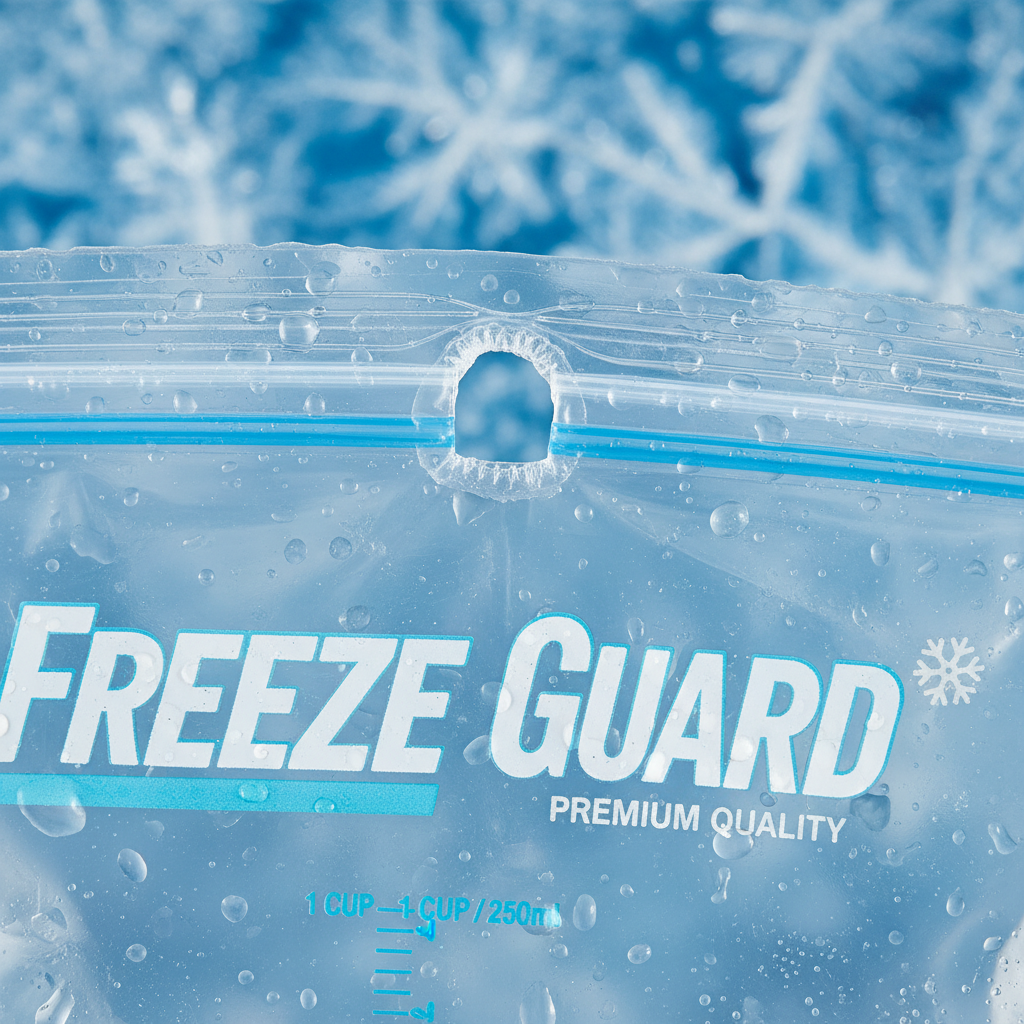
For food service products that may not be used all at once (e.g., a bag of frozen chicken nuggets in a restaurant kitchen), a zipper closure adds immense value. It protects the remaining product from contamination and freezer burn without requiring a separate clip or transfer to a container.
Bags on a Roll
Perforated bags on a roll are excellent for keeping workstations tidy and are often used in produce sections or for manual packing of smaller items.
4. Customization and Printing: Branding Your Packaging
In the B2B sector, packaging is often the first interaction a chef or store manager has with your product. Generic packaging implies a commodity; custom printed packaging implies a brand.
Printing Technologies
For plastic freezer bags, two main printing methods are used:
- Flexographic Printing (Flexo): The most common method for flexible packaging. It uses flexible relief plates and is cost-effective for medium to large runs. Modern flexo presses can achieve high-quality results with up to 8-10 colors.
- Rotogravure (Gravure): Uses engraved cylinders. This offers the highest print quality with rich color saturation and fine detail. It is ideal for very large runs due to the higher setup cost of the cylinders.
Ink Considerations for Freezing
Standard inks can flake or peel when the substrate (plastic) contracts in the freezer. Freezer-grade inks are formulated to bond aggressively with the polyethylene surface (often requiring corona treatment of the plastic) and to withstand moisture and condensation without running. When you request a quote, ensure you specify that the print must be deep-freeze resistant.
Design Elements to Include
- Brand Logo: For recognition.
- Transparent Window: Allows the buyer to inspect the quality of the food without opening the seal.
- Handling Instructions: "Keep Frozen," "Thaw in Refrigerator," etc.
- Traceability Codes: Areas printed with a matte finish to allow for date coding or lot number stamping during production.
5. Use Cases in the Food Industry
Meat and Poultry Processing
Processors require high-puncture-resistant bags. Often, these bags are colored (e.g., blue tint) to ensure that if a piece of plastic accidentally tears off, it can be easily identified visually. Vacuum-sealable freezer bags are also common here to extend shelf life significantly.
Seafood and Aquaculture
Seafood is highly sensitive to freezer burn. Thick, multi-layer bags are often used. For retail-ready seafood, high-clarity bags with premium printing are essential to showcase the freshness of the catch.
Bakery and Dough
Frozen dough and breads need bags that prevent moisture loss (which causes the bread to dry out) but also allow for some expansion during the initial freezing phase. Wicketed bags are the standard here for high-speed automated bagging.
Fruit and Vegetable IQF
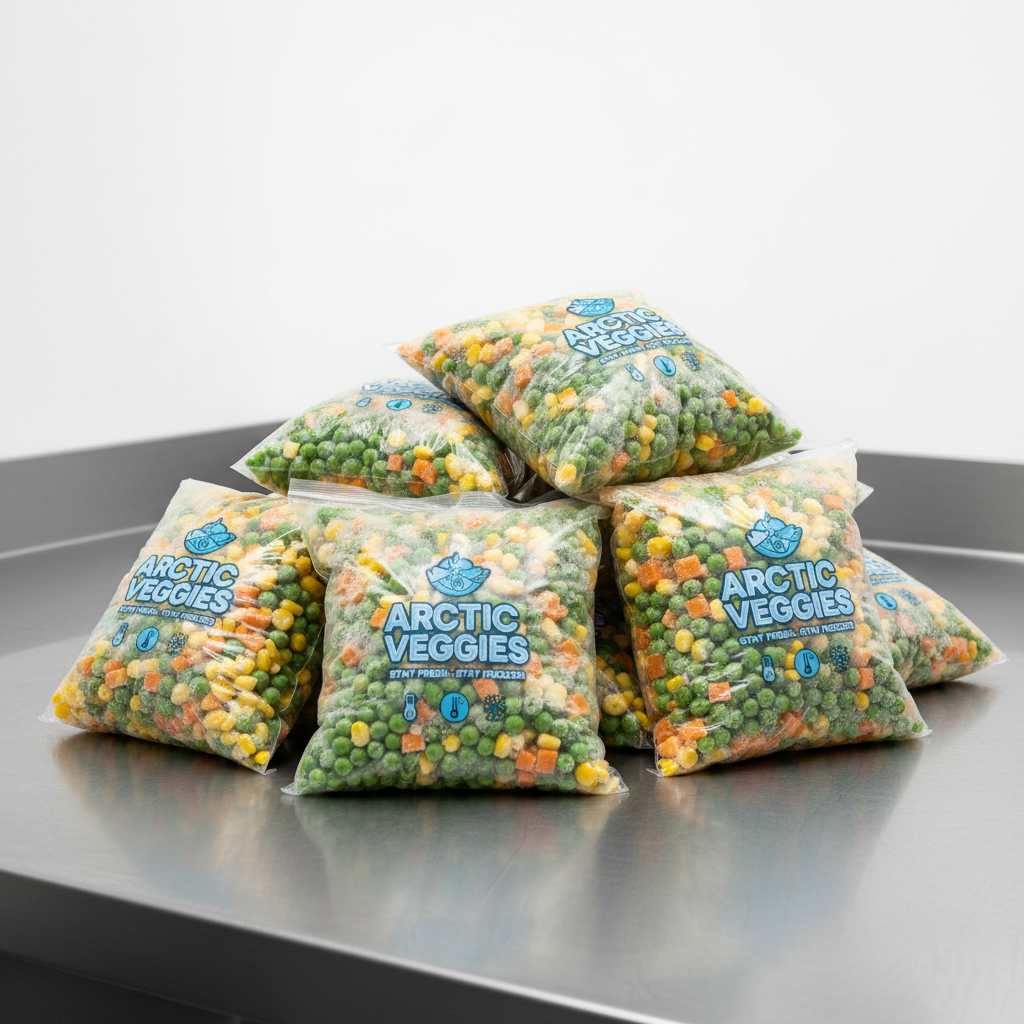
Individually Quick Frozen (IQF) products are usually packed in pillow-pack style bags or stand-up pouches. The film must be robust enough to handle the weight of the product shifting during transport.
6. Quality Assurance and Testing
When evaluating a supplier, ask about their quality control protocols. Key tests for freezer bags include:
- Drop Test: Freezing a filled bag and dropping it from a standard height to ensure seals do not burst.
- Seal Strength Test: Measuring the force required to pull the seal apart.
- Tensile Strength: Testing how much the plastic can stretch before breaking.
- Leak Testing: Submerging sealed bags to check for pinholes.
7. Buying Guide: How to Order Custom Freezer Bags
Navigating the procurement process requires preparation. Here is a checklist to streamline your ordering experience.
Determine Your Minimum Order Quantity (MOQ)
Custom manufacturing involves setup times for extrusion and printing presses. Consequently, factories have MOQs. For unprinted bags, MOQs are lower. For custom printed bags, expect MOQs starting from 10,000 to 30,000 units depending on size and complexity. Discuss your volume needs early.
Artwork Preparation
If you require printing, you will need vector artwork (AI or PDF format). Your supplier can often provide a dieline template for your designers to work with. Be sure to account for the "eye mark" (a small printed block used by packing machines to cut the bag correctly) if you are ordering roll stock.
Lead Times
Custom production typically takes 3-4 weeks after artwork approval, plus shipping time. Ocean freight is the most economical for bulk orders but requires planning. Air freight is an option for urgent samples or smaller batches.
Sampling
Before committing to a full production run, always ask for samples. You can usually request:
- Stock Samples: To check material quality and seal strength immediately.
- Pre-production Samples: A physical proof of your specific design (may incur a setup fee).
Ready to proceed? You can visit our guide on how to order to understand the step-by-step workflow.
8. Sustainability in Freezer Packaging
Sustainability is a growing concern for B2B buyers. Fortunately, polyethylene (PE) is a thermoplastic, meaning it can be melted down and recycled.
- Recyclability: Pure PE bags (LDPE/LLDPE) are recyclable in stream #4.
- Downgauging: Using stronger resin blends (like Metallocene) allows you to use a thinner bag without sacrificing strength, reducing plastic usage by 10-20%.
- Post-Industrial Recycled (PIR) Content: Some non-food-contact freezer bags (e.g., secondary packaging) can include recycled content, though virgin material is required for direct food contact.
9. Frequently Asked Questions (FAQ)
Q1: Can I use standard vacuum bags for freezing?
Yes, most vacuum bags are designed for freezing. They are typically made of a Nylon/PE blend which offers excellent oxygen barrier properties and puncture resistance, making them superior for long-term freezer storage.
Q2: What is the difference between a freezer bag and a storage bag?
Freezer bags are thicker (usually 2 mil+) and contain specific additives to prevent the plastic from cracking at low temperatures. Storage bags are thinner and intended for room temperature or short-term fridge use.
Q3: How do I measure the thickness of my current bags?
You can use a micrometer to measure thickness. If you are unsure, you can send a sample to your supplier, and they can analyze the material and gauge for you.
Q4: Are your freezer bags BPA-free?
Yes, high-quality polyethylene freezer bags are free from Bisphenol A (BPA) and phthalates, making them safe for food contact.
Q5: Can you print on both sides of the bag?
Yes, custom printing can be applied to both the front and back of the bag. However, increasing the number of colors and print areas may impact the cylinder cost.
Q6: What is the best bag style for automated packaging?
Wicketed bags or roll-stock film are best for automation. Wicketed bags are used with air-assist loading machines, while roll stock is used on Form-Fill-Seal (FFS) machines.
Q7: Do you offer biodegradable freezer bags?
While biodegradable options exist, they often degrade faster when exposed to moisture. For long-term freezer storage, traditional recyclable PE is often preferred for durability, but compostable options are improving. Contact us for the latest material availability.
Conclusion
Selecting the right plastic freezer bag is a balance of material science, operational efficiency, and brand presentation. Whether you are packaging bulk meat cuts or retail-ready frozen vegetables, the quality of your packaging reflects the quality of your product. By understanding the nuances of LDPE blends, thickness requirements, and print options, you can secure packaging that protects your bottom line and your brand reputation.
At YBJ Packing, we specialize in helping businesses find the exact specification they need. From custom sizing to high-definition printing, our team is ready to support your supply chain.
Ready to upgrade your food packaging? Request a quote today or request a sample kit to see our quality firsthand.