

Introduction: The Strategic Value of Resealable Packaging
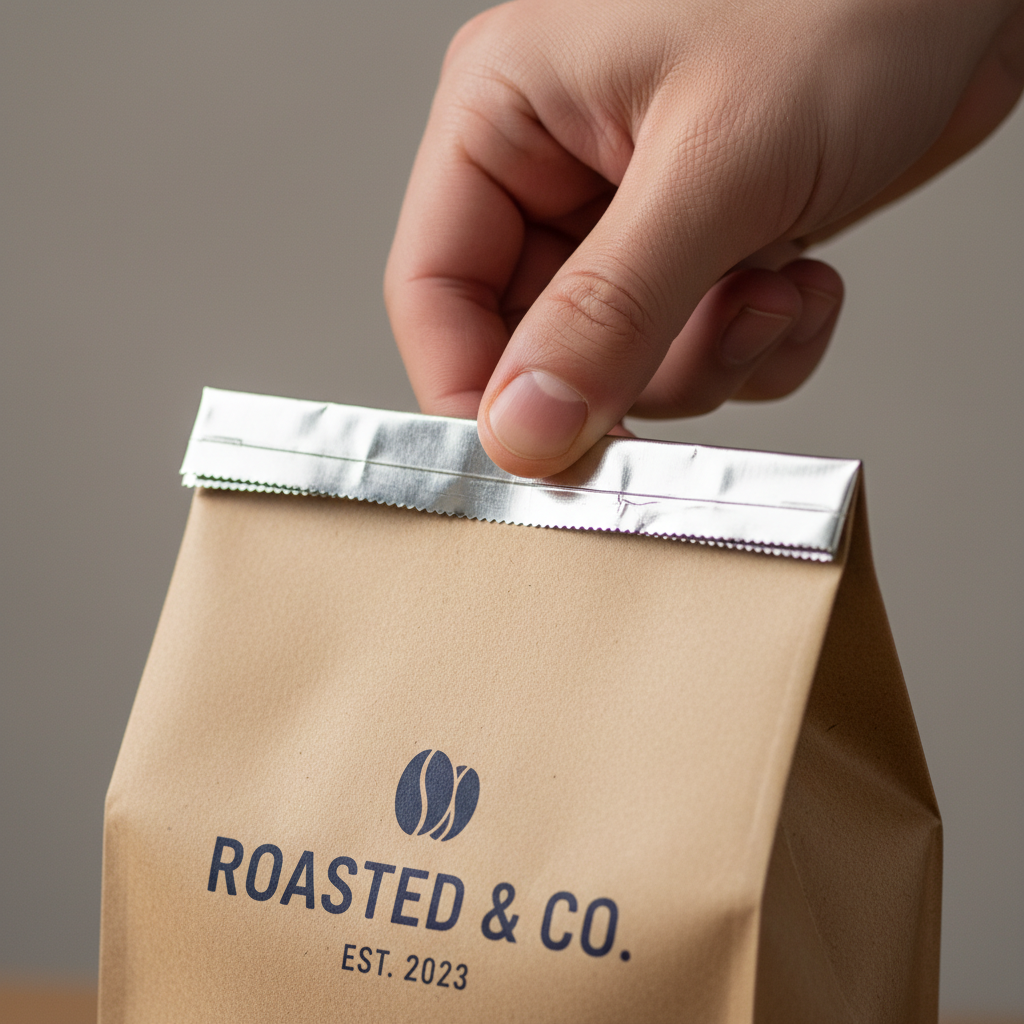
In the competitive landscape of food retail and service, packaging serves two primary masters: preservation and presentation. For bakeries, coffee roasters, and confectionery brands, the tin tie paper bag has emerged as a gold standard. It combines the tactile, organic appeal of paper with the functional necessity of a resealable closure. Unlike standard fold-over bags that require tape or stickers (which often lose adhesion), the integrated tin tie mechanism allows end-consumers to open and reseal the package repeatedly, maintaining product freshness long after the first purchase.
For B2B buyers—including procurement managers at restaurant chains, packaging distributors, and operations directors at food production facilities—sourcing the right tin tie bag is not just about aesthetics. It involves navigating a matrix of material specifications, barrier properties, sizing tolerances, and manufacturing capabilities. A poor choice can lead to grease leakage, stale products, or operational headaches on the filling line.
This comprehensive guide explores the technical and practical aspects of selecting custom tin tie paper bags. We will cover material science, sizing strategies, printing technologies, and the critical logistics of wholesale procurement to help you make an informed decision for your supply chain.
1. Anatomy of a Tin Tie Paper Bag
To specify the correct product, it is essential to understand the construction. A standard tin tie bag consists of three main components, each customizable based on the application.
The Base Material (Substrate)
The structural integrity of the bag comes from the paper layer. Common options include:
- Natural Kraft (Brown): The most popular choice for organic, artisanal, or eco-friendly brands. It effectively hides minor stains and offers a rustic look.
- Bleached Kraft (White): Offers a cleaner canvas for vibrant, full-color printing. It is often preferred for medical, pharmaceutical, or high-contrast modern branding.
- Recycled Kraft: Contains a percentage of post-consumer waste. While sustainable, the fibers may be shorter, slightly reducing tensile strength compared to virgin kraft.
The Barrier Lining
Paper is porous. Without a lining, oils from coffee beans or butter cookies will seep through, creating unsightly grease spots and compromising the bag’s structure. Linings also control air exchange.
- Polyethylene (PE) Lining: The industry standard for grease resistance and moisture control. It is heat-sealable (optional) and durable.
- Glassine Lining: A smooth, grease-resistant paper lining. It is often used for baked goods where a plastic-free option is desired, though it offers less moisture protection than PE.
- PLA (Polylactic Acid): A biodegradable plastic derived from corn starch. It offers similar barrier properties to PE but aligns with compostable packaging goals.
The Tin Tie Mechanism
The “tin tie” is typically a strip of paper or plastic encasing a double wire (often steel or galvanized iron). It is applied to the top of the bag using a strong adhesive. The length of the tie must match the bag width perfectly to ensure a tight seal when folded.
2. Material Selection: Matching Specs to Product
Choosing the right material combination depends heavily on what is going inside the bag. Over-engineering adds unnecessary cost, while under-engineering risks product spoilage.
For Coffee and Tea
Coffee beans release carbon dioxide and are sensitive to oxygen and moisture. A simple paper bag is insufficient. You require a high-barrier liner (PE or foil laminate) and often a one-way degassing valve. The tin tie serves as a secondary closure after the heat seal is broken.
For Bakery Items (Cookies, Donuts, Pastries)
High fat content is the challenge here. If you are packaging buttery croissants or glazed donuts, a standard 50 GSM paper bag will show grease spots within hours. You need a greaseproof inner layer. For short-term storage (consumed within 24 hours), a clay-coated paper or glassine liner is sufficient. For shelf-stable retail cookies, a poly-lined bag is mandatory to prevent staling.
For Dry Goods (Granola, Nuts, Spices)
These products are heavy and can have sharp edges (like nut shells). Puncture resistance is key. Buyers should specify a higher GSM (Grams per Square Meter) paper weight—typically 60 GSM to 80 GSM—to prevent tearing during transport. Explore our custom tin tie paper bag options to see different material weights in action.
3. Sizing and Capacity Guidelines
One of the most common errors in ordering wholesale food packaging is miscalculating volume. A “1 lb” coffee bag does not necessarily hold 1 lb of granola or 1 lb of loose-leaf tea due to differences in product density.
Standard Dimensions (Width x Gusset x Height)
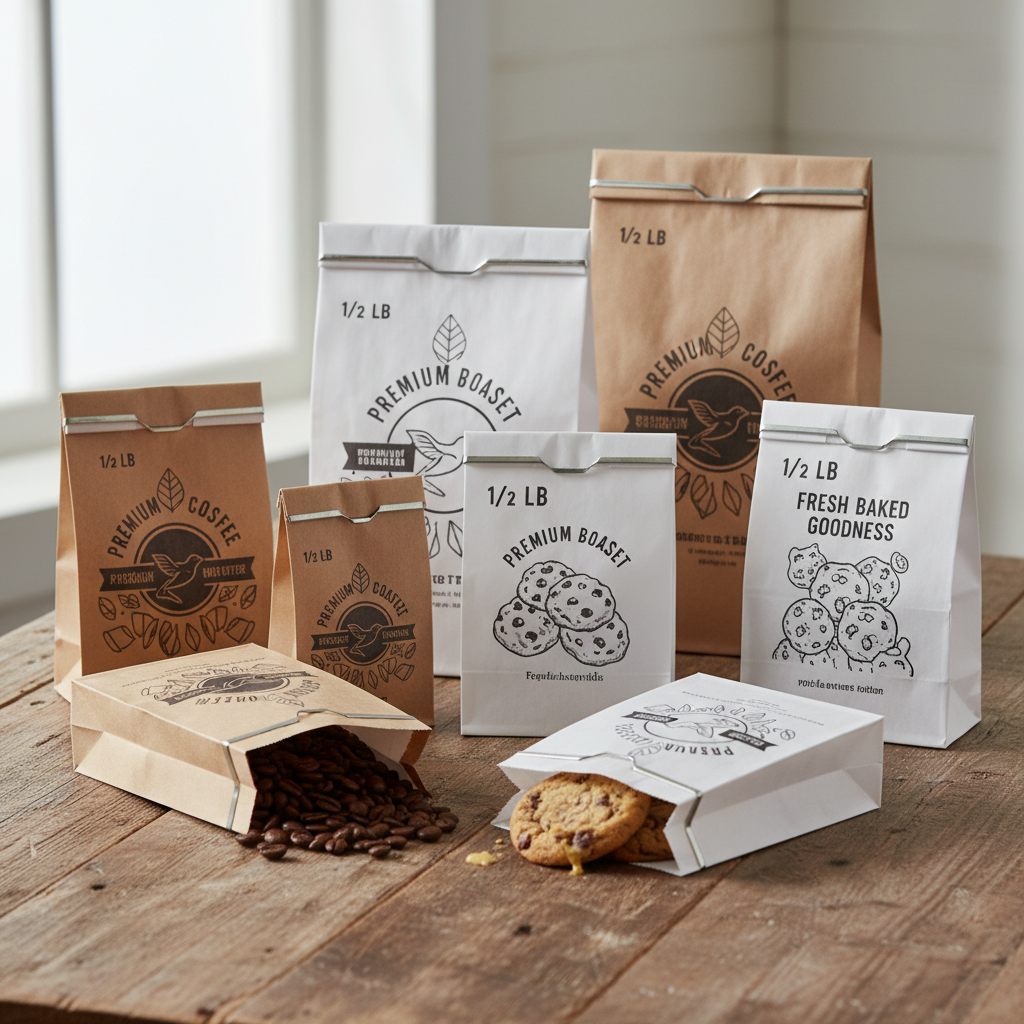
Tin tie bags typically feature a block bottom (SOS – Self Opening Sack) or a rectangular bottom, allowing them to stand upright on shelves. Common sizes include:
- 1/2 lb (250g): Approx. 3.3″ x 2.5″ x 7.75″. Ideal for sample packs, confectionery, or small coffee batches.
- 1 lb (500g): Approx. 4.25″ x 2.5″ x 10.5″. The standard retail size for coffee and granola.
- 2 lb (1kg): Approx. 5″ x 3″ x 11.5″. Used for bulk grains, flour, or large family-pack bakery items.
- 5 lb (Bulk): Used primarily for back-of-house storage or wholesale distribution.
Measuring the Gusset
The gusset (side fold) is critical for expandable volume. A deeper gusset allows the bag to open wider, making filling easier. When requesting a quote, always specify if your dimensions are internal (usable space) or external, as the bottom seal and tie fold reduce usable height by 1-2 inches.
4. Window vs. Non-Window: The Visibility Trade-off
Should your bag have a window? This is a merchandising decision that impacts shelf life.
Pros of Windows
A die-cut window (patched with clear PET or PP) allows customers to see the texture and quality of the product. This is highly effective for artisanal granola, colorful candies, or textured cookies. It builds trust and triggers appetite appeal.
Cons of Windows
Light is the enemy of many food products. UV exposure accelerates oxidation in coffee and can fade the colors of spices or dried fruits. If your product is light-sensitive, opt for a solid bag with high-quality printed photography instead of a physical window.
5. Printing and Customization Options
In the B2B market, packaging is your billboard. Printed tin tie paper bags offer 360-degree branding opportunities. Understanding printing methods helps in budgeting and design.
Flexographic Printing (Flexo)
Most common for high-volume wholesale orders (10,000+ units). It uses flexible relief plates.
Pros: Low unit cost at volume, water-based inks (food safe), fast production.
Cons: Higher setup costs (plate charges), lower resolution than offset/digital.
Rotogravure
Used for very high volumes requiring photo-realistic quality.
Pros: Exceptional detail and color consistency.
Cons: Very high cylinder costs, high Minimum Order Quantities (MOQ).
Digital Printing
Ideal for short runs, seasonal promotions, or multiple SKU variations (e.g., 10 different coffee flavors).
Pros: No plate fees, quick turnaround, easy variable data.
Cons: Higher per-unit cost.
Custom Features Checklist
- Spot UV: Glossy highlights on a matte bag for premium contrast.
- Hot Foil Stamping: Metallic gold or silver accents for luxury positioning.
- Tear Notches: If the bag is heat-sealed above the tin tie, a tear notch is essential for easy opening.
6. Manufacturing and Quality Assurance
When evaluating a tin tie paper bag manufacturer, you are vetting their process control. Inconsistent adhesive application or weak bottom seals can be disastrous.
Adhesive Quality
The tin tie itself is glued to the paper. If the adhesive is weak, the tie will detach when the customer tries to fold it. Ask your supplier about the adhesive specifications and temperature tolerance (especially if bags are stored in hot warehouses).
Food Safety Compliance
Ensure the manufacturer adheres to GMP (Good Manufacturing Practices). The paper, inks, and glues must be food-grade. For international buyers, compliance with FDA (US) or LFGB (Europe) standards is a standard requirement for direct food contact packaging.
Load Testing
A quality assurance protocol should include drop tests and static load tests. A 2 lb bag should be able to hold 2 lbs of product without the bottom seam bursting, even if dropped from a shelf height.
7. Logistics: MOQ, Lead Times, and Shipping
Efficient procurement requires balancing inventory costs with unit pricing.
Minimum Order Quantity (MOQ)
Custom printed bags usually carry an MOQ ranging from 5,000 to 30,000 units depending on the printing method. Plain stock bags may have much lower MOQs (e.g., 1 carton). Buyers should forecast demand accurately to maximize volume discounts.
Flat Packing Efficiency
Tin tie bags are shipped flat. This is a significant logistical advantage over rigid containers (like plastic tubs or glass jars). You can store thousands of bags in a small footprint, reducing warehousing costs. However, ensure the cartons are sturdy to prevent the tin ties from being crushed or bent during transit.
Lead Times
Custom manufacturing typically takes 3-6 weeks after artwork approval, plus shipping time. Always factor in buffer time for artwork revisions and sample approval. If you need guidance on timelines, check our how to order page.
8. Sustainability Considerations
Modern consumers scrutinize packaging waste. The tin tie bag is a hybrid product (paper + metal + plastic/glue), which complicates recycling.
- Separation Instructions: Many brands print instructions on the bag: “Remove tin tie before recycling.”
- Compostable Options: Some manufacturers offer 100% compostable bags where the liner is PLA and the tie is made from certified compostable materials, though the metal wire remains a challenge for industrial composters.
- Recycled Content: Maximizing post-consumer recycled (PCR) content in the paper layer is the most straightforward way to improve the sustainability profile without compromising functionality.
9. Comparison: Tin Tie vs. Other Closures
Why choose tin tie over a zipper pouch or a simple fold-over?
| Feature | Tin Tie Bag | Stand-Up Pouch (Zipper) | Fold-Over (Tape) |
|---|---|---|---|
| Resealability | Excellent (Mechanical fold) | Excellent (Interlocking track) | Poor (Adhesive wears off) |
| Aesthetics | Artisanal, Traditional, Organic | Modern, Industrial | Basic, Economy |
| Filling Speed | Moderate (Requires manual/auto folding) | Fast (Zip and seal) | Fast (Tape gun) |
| Cost | Moderate | Higher | Lowest |
| Air Tightness | Good (if lined) | Best (Hermetic seal) | Low |
10. Buyer’s Checklist for Requesting a Quote
To get an accurate quote quickly from a tin tie paper bag supplier, have the following information ready:
- Dimensions: Width x Gusset x Height (specify internal or external).
- Material Preference: Kraft (Brown/White), Liner type (Poly/Glassine/PLA).
- Window: Yes/No (and shape/size).
- Print Specs: Number of colors, coverage area (front/back/gussets).
- Quantity: Estimated annual volume or per-order volume.
- Product to be Packaged: (e.g., oily coffee beans vs. dry pasta).
If you are unsure about the specs, it is best to contact our team for a consultation. We can recommend the optimal configuration based on your product type.
Frequently Asked Questions (FAQs)
1. Are tin tie bags heat sealable?
Yes, most lined tin tie bags are heat sealable. The heat seal is applied above the tin tie. The customer cuts off the heat seal to access the product and then uses the tin tie for reclosing. This provides tamper evidence and maximum freshness.
2. Can I print on the bottom of the bag?
Yes, the bottom of the bag is often used for barcodes, batch numbers, or recycling information. However, complex graphics are discouraged here as they may be obscured by the fold lines.
3. What is the shelf life of food in a tin tie bag?
This depends on the liner. A standard unlined paper bag offers minimal shelf life (days). A poly-lined bag can preserve bakery items for 1-2 weeks. High-barrier laminated bags with heat seals can preserve coffee for 12+ months.
4. Can I order tin ties separately to apply manually?
Yes, adhesive-backed tin ties can be purchased separately and applied to standard gusseted bags. This is a good option for very small businesses that cannot afford custom manufacturing MOQs, but it is labor-intensive.
5. Is the tin tie removable for recycling?
Yes, consumers can peel off the tin tie strip to recycle the paper bag separately. Educating your customer through printed instructions on the bag is recommended.
6. Do you offer custom sizes outside of the standard 1/2lb and 1lb options?
Absolutely. As a manufacturer, we can customize the die-cut dimensions to fit unique products, such as long baguette bags or wide cookie bags. Custom tooling fees may apply.
Conclusion
The tin tie paper bag remains a versatile, reliable, and consumer-friendly packaging solution. It bridges the gap between the low cost of simple paper sacks and the high functionality of rigid containers. By carefully selecting the right materials, barrier coatings, and print finishes, you can elevate your brand’s perceived value while ensuring product integrity.
Whether you are scaling up a coffee roastery or sourcing wholesale food packaging for a distribution network, understanding the technical details outlined in this guide will ensure you procure the right bag for the job.
Ready to start your custom project? Browse our food packaging categories or request a sample kit today to test our quality firsthand.