

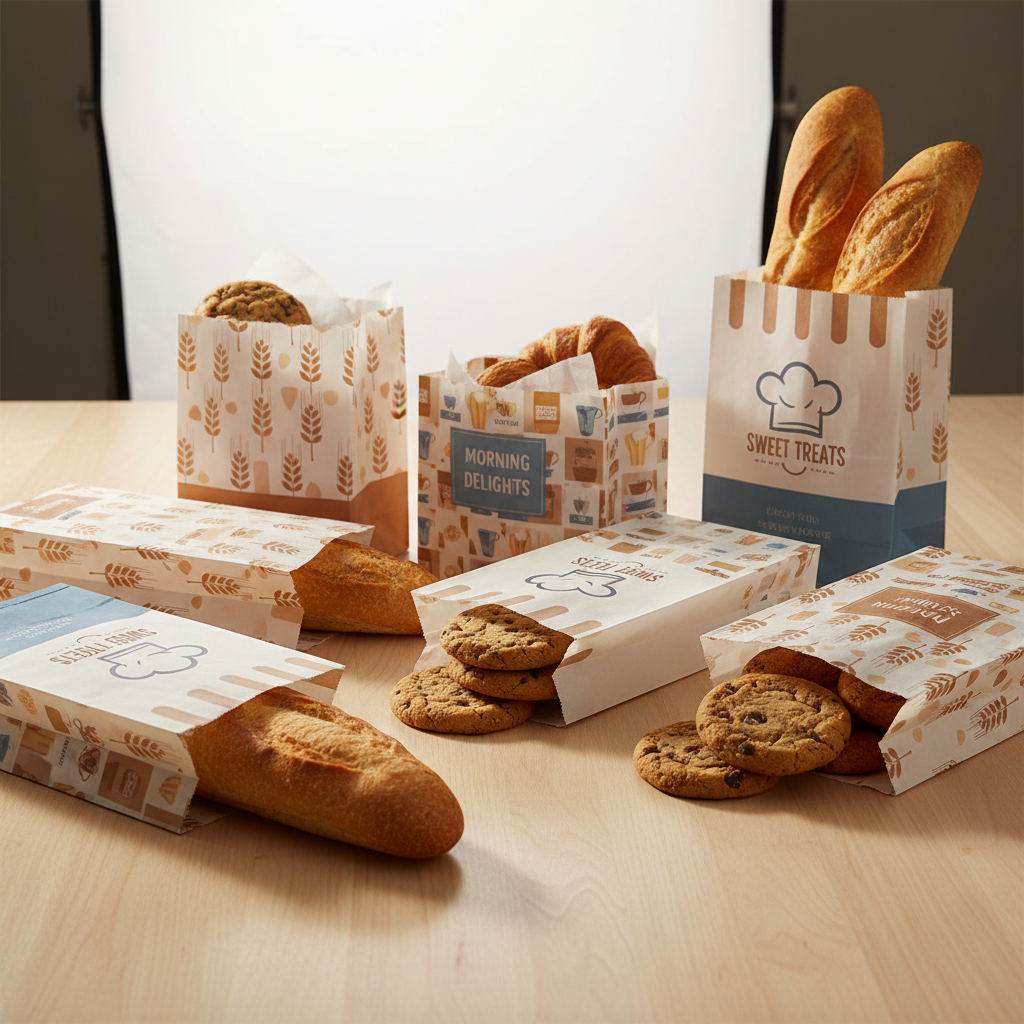
In the high-volume world of food service, packaging is rarely just a container; it is a critical operational tool and a primary vehicle for branding. Among the most versatile and ubiquitous packaging solutions is the flat paper bag. Often overshadowed by larger carry-out bags, the flat bag (and its close relative, the satchel bag) is the workhorse of bakeries, quick-service restaurants (QSR), and concession stands worldwide.
For procurement managers and business owners, selecting the right flat paper bag involves more than just picking a size. It requires balancing grease resistance, material strength, printability, and sustainability. A bag that fails—tearing under the weight of a baguette or leaking grease from a hash brown—damages the customer experience instantly. Conversely, a well-engineered custom bag enhances perceived value and keeps operations running smoothly.
This comprehensive guide explores the technical landscape of flat paper bags, detailing material specifications, coating options, sizing standards, and the nuances of manufacturing. Whether you are sourcing for a multinational franchise or a boutique bakery chain, this guide provides the data needed to make informed purchasing decisions.
1. Defining the Flat Paper Bag: Construction and Geometry
Before diving into materials, it is essential to define the structural characteristics of a flat paper bag. Unlike Block Bottom (SOS) bags, which stand upright, flat bags are designed to lie flat and are typically constructed from a single sheet of paper folded and glued.
The V-Bottom vs. Square Bottom
The defining feature of a standard flat bag is the V-shaped bottom. This construction is cost-effective and space-efficient, allowing thousands of bags to be stacked in a small footprint. They are ideal for items that are consumed immediately or do not need to stand upright on a shelf.
- True Flat Bags: These have no side gussets. They are essentially two-dimensional envelopes perfect for cookies, pretzels, or cutlery.
- Satchel Bags: While often grouped with flat bags, satchels feature side gussets (expandable sides) which allow the bag to accommodate thicker items like sandwiches or multiple pastries without tearing the seams.
Understanding this distinction is the first step in sourcing. If your product is thick or bulky, a flat bag without gussets will distort the branding and risk rupture; a satchel style would be the superior engineering choice.
2. Material Specifications: The Foundation of Performance
The performance of a flat paper bag is dictated by the substrate used. In the B2B context, requesting generic "paper" is insufficient. You must specify the paper grade, weight (GSM), and treatment to ensure the packaging meets the demands of the food product.
Kraft Paper Grades
The majority of food-grade flat bags are manufactured from Kraft paper due to its high tensile strength and elasticity.
- White Bleached Kraft: This provides a pristine, clean canvas for vibrant branding. It is chemically treated to remove lignin, resulting in a white surface that ensures accurate color reproduction for logos. It is the standard for branded bakery bags and pharmacy bags.
- Natural Brown (Unbleached) Kraft: Retaining the natural wood pulp color, this option communicates sustainability and organic appeal. It is slightly stronger than bleached paper of the same weight because the fibers are less processed.
- Recycled Kraft: While popular for non-food retail, recycled content in direct food contact packaging must be carefully regulated. Many buyers opt for virgin fiber for direct food contact to ensure compliance with strict FDA and EU food safety standards, avoiding potential mineral oil migration from recycled newspapers or cartons.
Basis Weight (GSM)
Paper thickness is measured in Grams per Square Meter (GSM). Choosing the wrong GSM is a common procurement error.
- 30–40 GSM: Very thin. Suitable for light, dry items like single cookies or breadsticks. Economical but low opacity.
- 40–60 GSM: The industry standard for most bakery and fast food applications. It offers a balance of opacity, strength, and cost.
- 60–80+ GSM: Heavy-duty. Used for larger bags carrying heavier items or when a premium, rigid feel is desired.
3. Grease Resistance and Coatings
For many food applications, standard paper is insufficient because it absorbs oil, leading to unsightly stains and weakened packaging. Buyers must determine the level of grease resistance required.
Greaseproof Paper (Kit Levels)
Greaseproof paper is not necessarily coated with plastic; rather, the paper fibers are beaten extensively during the pulping process (hydration) to reduce porosity. The oil resistance is measured by the "Kit Test," ranging from 1 to 12.
- Kit 1–3: Low resistance. Good for dry baked goods (baguettes, dry cookies).
- Kit 4–7: Medium resistance. Suitable for pastries with butter content, croissants, or sandwiches.
- Kit 8–12: High resistance. Required for fried foods, hash browns, or oily snacks.
PE (Polyethylene) Lining
For products that are wet, sticky, or extremely greasy, a physical barrier is needed. A thin layer of PE (typically 10–15 microns) can be extruded onto the paper. This provides:
- Moisture Barrier: Prevents sauces or steam from disintegrating the paper.
- Heat Sealability: PE allows the bag to be heat-sealed for tamper evidence, unlike standard paper which must be taped or folded.
Note: While PE offers superior performance, it complicates recycling. If sustainability is a primary KPI, consider water-based dispersion coatings or high-Kit greaseproof papers as alternatives.
4. Sizing and Capacity Guide
Standardization helps reduce costs, but custom sizing is often necessary for specific food items to prevent product movement and improve presentation. When requesting a quote for food packaging bags, use the standard dimension format: Width (W) x Length (L) + Side Gusset (G).
Common Industry Sizes (Indicative)
| Application | Typical Dimensions (mm) | Style | Paper Weight |
|---|---|---|---|
| Cutlery / Chopsticks | 70 x 250 | Flat (No Gusset) | 35-40 GSM |
| Cookie / Pretzel | 120 x 120 | Flat (No Gusset) | 40-50 GSM |
| French Fry Scoop | 110 x 110 + 30 | Satchel / Pocket | 50-60 GSM (Greaseproof) |
| Baguette Sleeve | 100 x 600 + 40 | Satchel | 35-45 GSM |
| Sandwich / Burger | 160 x 160 + 50 | Satchel (Open on two sides option) | 40-50 GSM |
Tip: Always measure your physical product and add 10–15mm of clearance to the width and 20–30mm to the length to ensure easy loading by staff during peak hours.
5. Printing and Brand Customization
A plain brown bag serves a function; a printed bag tells a story. In B2B food service, the flat bag is a mobile billboard. The printing process for these bags is highly specialized.
Flexographic Printing
The vast majority of flat paper bags are printed using flexography (flexo). This uses flexible relief plates and fast-drying, water-based inks.
- Food Safety: Water-based inks are non-toxic and low-odor, making them the only safe choice for food packaging. Solvent-based inks are generally avoided in this sector.
- Colors: Most manufacturers can print up to 4–6 colors. However, for cost efficiency, 1 or 2 PMS (Pantone Matching System) colors are standard.
- Registration: Due to the high speed of bag conversion machines, very tight registration (alignment of colors) can be challenging. Designs with "loose" registration or random repeat patterns are often more cost-effective and produce less waste.
Design Considerations for Buyers
- Vector Art: Always supply artwork in vector formats (AI, PDF, EPS). Raster images (JPEG, PNG) will result in pixelated, unprofessional print quality.
- Ink Coverage: Heavy ink coverage (100% flood coats) can saturate the paper, potentially causing curling or affecting the glue seams. It also increases cost. A coverage of 20–40% is often the sweet spot for aesthetics and performance.
- Bleed: If your design runs to the edge of the bag, ensure your artwork includes bleed. However, note that printing over the glued seam area should be avoided to ensure the bag holds together properly.
6. Strategic Use Cases in Food Service
Flat paper bags are not one-size-fits-all. Different segments of the food industry utilize them for distinct purposes.
The Bakery Sector
Bakeries require breathability. Hot bread releases moisture; if trapped in a plastic-lined bag, the crust becomes soggy. A standard kraft flat bag or a micro-perforated bag allows steam to escape, keeping the crust crisp. Window bags (with a clear strip) are also popular here to showcase the product.
Quick Service Restaurants (QSR)
Speed is king. QSR chains use open-top flat bags (often called pockets) for fries, hash browns, and hand-held pies. The key requirement here is grease resistance (Kit 7+) to prevent oil from transferring to the customer’s hands or the outer carry bag.
Concessions and Street Food
For items like churros, hot dogs, or roasted nuts, the bag often acts as the plate. In these cases, the paper needs to be rigid enough to hold the food’s weight without collapsing. Cone-shaped flat bags are often used for easy holding.
7. Manufacturing and Quality Assurance
Understanding how your bags are made helps in negotiating lead times and quality expectations. The process typically involves:
- Printing: A large roll of paper is fed through the flexo press.
- Forming: The paper is folded into a tube.
- Cutting and Gluing: The tube is cut to length, and the bottom is glued and folded.
- Ejection/Counting: Finished bags are counted and boxed.
Quality Checkpoints:
Reliable manufacturers perform specific tests:
– Burst Strength: Ensuring the paper doesn’t split.
– Seam Adhesion: Testing the glue bond, especially under heat (e.g., for hot food).
– Dimensions Check: Ensuring the bags fit within tight tolerances for automated filling lines.
8. Buying Guide: How to Order Effectively
Navigating the procurement process requires preparation. Here is a checklist to streamline your interaction with suppliers.
Minimum Order Quantities (MOQ)
Custom printing requires setting up printing plates and calibrating machinery, which incurs fixed costs. Therefore, MOQs for custom printed flat bags are typically higher than stock items. Expect MOQs starting from 30,000 to 50,000 units for fully custom sizes and prints. For unprinted stock sizes, quantities can be much lower.
Lead Times
Production timelines vary by season and complexity. Generally:
– Digital Proofing: 2–3 days.
– Mass Production: 2–4 weeks after artwork approval.
– Shipping: Dependent on logistics (Sea vs. Air).
The Sampling Process
Before committing to a full run, request samples. You can ask for:
1. Stock Samples: To check material quality and construction (usually free or low cost).
2. Pre-production Samples: A physical prototype of your specific design (often expensive due to machine setup). Most buyers rely on digital proofs and stock samples to verify quality.
If you are ready to start the process, reviewing a clear guide on how to order can prevent delays and miscommunication.
9. Sustainability and Compliance
Global markets are increasingly regulating single-use packaging. When buying flat paper bags, ensure compliance with local laws.
- PFAS-Free: Many regions are banning PFAS (forever chemicals) often used in greaseproof coatings. Ask your supplier for PFAS-free greaseproof alternatives.
- Compostability: Verify if the bags are industrial compostable (EN 13432 standard) or home compostable. Bags with standard PE linings are not compostable; PLA linings or clay coatings are eco-friendly alternatives.
- FSC Certification: sourcing paper from responsibly managed forests is a strong selling point for consumer-facing brands.
10. Frequently Asked Questions (FAQ)
Q: Can flat paper bags be used in the microwave?
A: Generally, yes, provided they do not have metallic inks or foil linings. However, you should confirm the heat tolerance of the specific glue and greaseproof coating used with the manufacturer.
Q: What is the difference between a flat bag and a pinch-bottom bag?
A: A flat bag usually refers to the V-bottom style. A pinch-bottom bag is similar but sealed differently, often used for industrial sacks. In the context of small food bags, the terms are sometimes used interchangeably, but "flat bag" implies no side gussets.
Q: How do I know if I need a greaseproof bag?
A: If your food shows any visible oil spots when placed on a napkin for 5 minutes, you need greaseproof paper (Kit 4 or higher). If it is dry (like a biscotti), standard kraft is fine.
Q: Can I print on the inside of the bag?
A: Technically yes, but it is rarely recommended for food bags due to the direct contact between ink and food. It is safer and more cost-effective to print on the outside only.
Q: Do you offer custom sizes not listed in your catalog?
A: Yes, as a manufacturer, custom sizes are possible. However, they may require a new mold or knife setup, which can incur a one-time tooling fee.
Q: What file format do you need for my logo?
A: An editable vector file (AI, EPS, or PDF) is required for flexographic printing to ensure sharp lines and accurate color separation.
Conclusion
Flat paper bags are a fundamental component of the food service supply chain. They offer a balance of economy, functionality, and branding potential that few other packaging formats can match. By understanding the nuances of paper grades, grease resistance, and print technologies, buyers can source packaging that not only protects their product but also elevates their brand.
Whether you need a simple kraft sleeve for a baguette or a high-barrier, full-color bag for a greasy snack, YBJ Packing has the manufacturing capability to deliver. We specialize in tailoring solutions to your operational needs.
Ready to upgrade your food packaging? Contact us today to request a quote or get a sample of our high-quality flat paper bags.