

Introduction: The Strategic Value of Aluminum in Modern Food Service
In the competitive landscape of global food service and distribution, packaging is no longer just a vessel; it is a critical component of operational efficiency, product quality, and brand perception. For procurement managers, restaurant chains, and food manufacturers, selecting the right aluminum foil food container is a decision that impacts thermal performance, logistics costs, and sustainability goals.
Aluminum remains one of the most versatile materials in the packaging industry. Its ability to withstand extreme temperature fluctuations—from blast freezers to convection ovens—makes it indispensable for HORECA (Hotel, Restaurant, and Catering) and industrial food processing. However, not all foil containers are created equal. Variations in alloy composition, rim design, and wall structure can significantly affect production line compatibility and end-user experience.
This comprehensive guide explores the technical specifications, customization options, and sourcing strategies for wholesale buyers. Whether you are sourcing for a multinational airline or a regional bakery chain, understanding these nuances will help you make informed purchasing decisions when browsing our aluminum foil food container inventory.
1. Material Science: Why Aluminum Foil?
Barrier Properties and Food Safety
The primary reason aluminum is favored in commercial food packaging is its absolute barrier properties. Unlike plastic or paperboard, even thin gauges of aluminum foil provide a complete block against light, oxygen, moisture, and bacteria. This is crucial for extending the shelf life of perishable goods without relying heavily on preservatives. For large-scale food processors, this barrier protection translates to reduced spoilage rates during transport and storage.
Thermal Conductivity and Temperature Range
Aluminum is an excellent conductor of heat. This property allows for rapid and even heating during cooking or reheating, which is vital for food safety. Conversely, it also allows for quick cooling, which is essential in blast-freezing operations to maintain food texture.
- Heat Resistance: Aluminum can withstand temperatures exceeding 400°C (752°F) without melting or releasing harmful substances, making it safe for direct oven use.
- Cold Resistance: It remains stable and does not become brittle at cryogenic temperatures, ideal for frozen meal lines.
Alloy and Temper Specifications
When sourcing bulk aluminum foil food containers, you may encounter specifications regarding the alloy and temper. Understanding these helps in selecting the right durability.
- Alloy 3003: Often used for higher-strength applications. The addition of manganese increases tensile strength, making it suitable for larger trays that must hold heavy portions without buckling.
- Alloy 8011: The standard for most disposable food containers. It offers excellent ductility, allowing for deep drawing processes without tearing.
- Temper: Most food containers use ‘O’ temper (fully annealed/soft) or ‘H’ tempers (strain-hardened). Soft tempers allow the foil to be formed into complex shapes, while harder tempers provide rigidity for trays that need to support heavy loads.
2. Structural Classifications: Wrinkle-Wall vs. Smooth-Wall
The manufacturing process defines the container’s structure and its suitable applications. Buyers must distinguish between wrinkle-wall and smooth-wall designs.
Wrinkle-Wall Containers
These are the industry standard for takeout and catering. The rim and walls have visible folds or wrinkles where the excess material is gathered during the stamping process.
- Pros: Cost-effective, lightweight, and widely available in standard sizes.
- Best For: Takeout meals, bakery items, roasted meats, and general catering use where hermetic sealing is not strictly required.
Smooth-Wall Containers
Smooth-wall containers are manufactured using a different tooling process that irons out the wrinkles, resulting in a sleek, premium appearance and a flat rim surface.
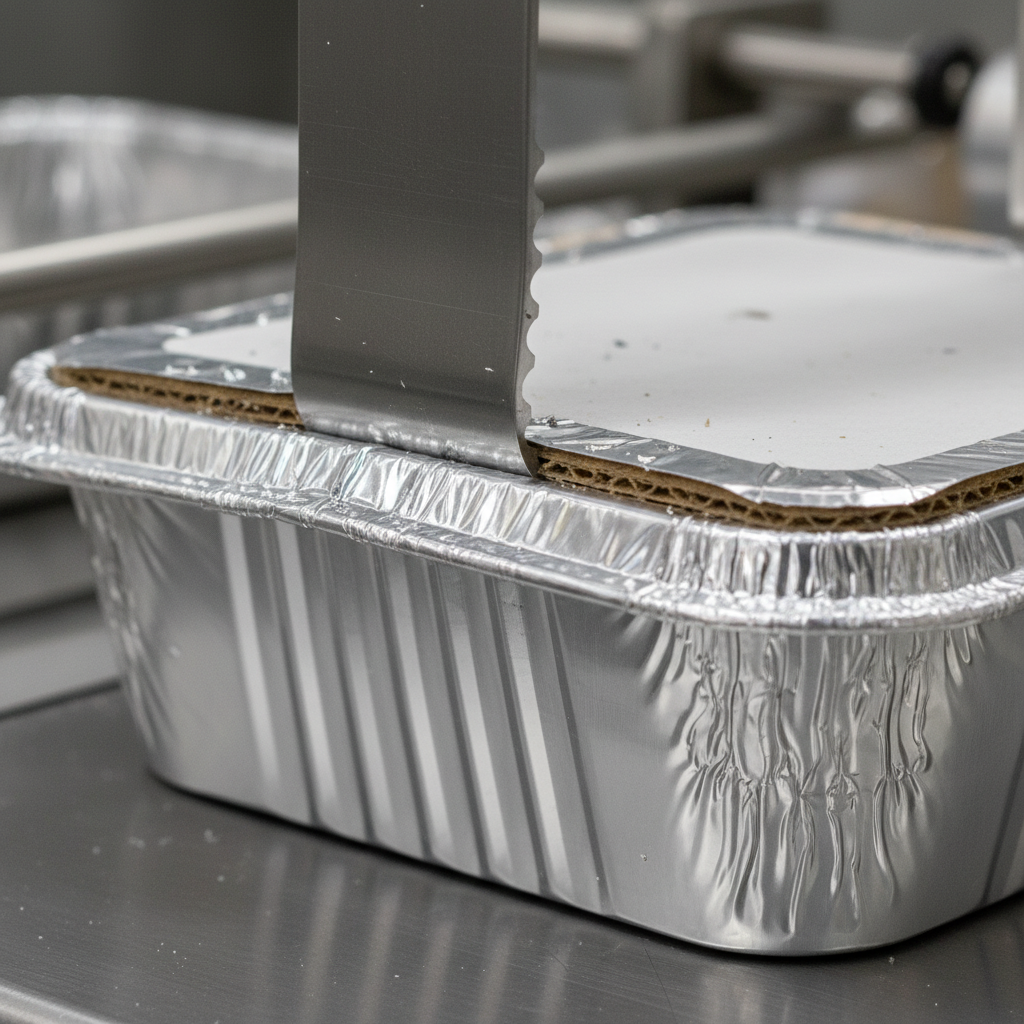
- Pros: Extremely rigid, aesthetic appeal, and crucially, they offer a flat surface for heat-sealing films. This creates a leak-proof, airtight seal.
- Best For: Ready-to-cook meals (RTC), Modified Atmosphere Packaging (MAP), and premium retail food products where shelf life extension is a priority.
3. Rim Styles and Lidding Compatibility
Selecting the correct rim style is critical to ensuring your lid fits securely. Mismatched rims and lids are a common cause of leakage and customer complaints.
Full Curl (Rolled Edge)
The edge of the container is rolled under to create a smooth, safe, and rigid rim. This is the most common style for standard aluminum foil containers.
- Compatible Lids: Foil-laminated board lids (which are crimped over the edge), clear plastic dome lids (snap-on), or simple foil sheets.
- Use Case: Rotisserie chickens, lasagna pans, and standard takeout.
Interrupted Vertical Curl (IVC)
This rim has a vertical flange with raised sections. It is designed specifically to hold a lid in place securely.
- Compatible Lids: Flat board lids that are crimped mechanically or manually.
- Use Case: Takeout operations requiring a secure closure without heat sealing machinery.
Hemmed Edge (G-Rim)
The foil is folded back on itself to create a safe, non-sharp edge, often used in lighter gauge containers.
- Compatible Lids: Snap-on plastic lids or simply wrapped with film.
- Use Case: Pastry packaging and light bakery items.
Smooth Flange (L-Rim)
A flat, horizontal rim primarily found on smooth-wall containers.
- Compatible Lids: Heat-seal films (peelable or weld seal).
- Use Case: Industrial food production lines, “cook-in” retail packaging.
4. Sizing and Capacity Guide
While custom sizes are available, adhering to standard industry sizes can reduce lead times and tooling costs. Capacities are typically measured in milliliters (ml) or fluid ounces (fl oz).
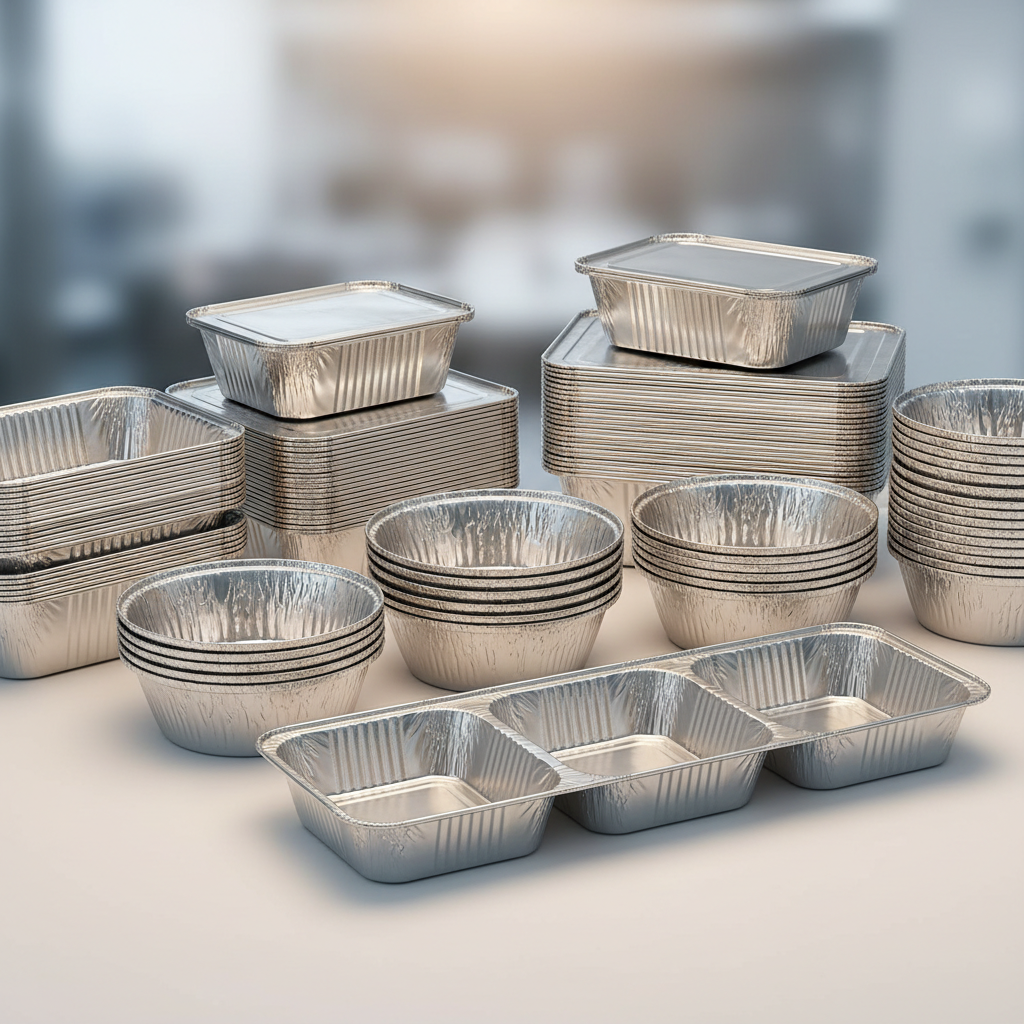
Standard Rectangular Containers
These are the workhorses of the food delivery industry. Common capacities include:
- 450ml – 600ml: Single servings of rice, pasta, or salads.
- 750ml – 1000ml: Standard main course size for Chinese or Indian takeout.
- 2000ml+: Family-sized portions, catering trays, or roasting pans.
Round Bowls and Tarts
Used extensively in baking (pies, tarts) and for specific cuisines (noodle dishes, soups).
- Diameter considerations: Ensure the diameter matches standard pie weights if used for bakery production.
Multi-Compartment Trays
For airline catering and institutional feeding (hospitals, schools), multi-compartment trays (2 or 3 cavities) keep sides separated from mains. These require specialized tooling and are often sourced by contract buyers.
For a broader look at different packaging form factors, explore our general food packaging box category.
5. Customization and Branding Options
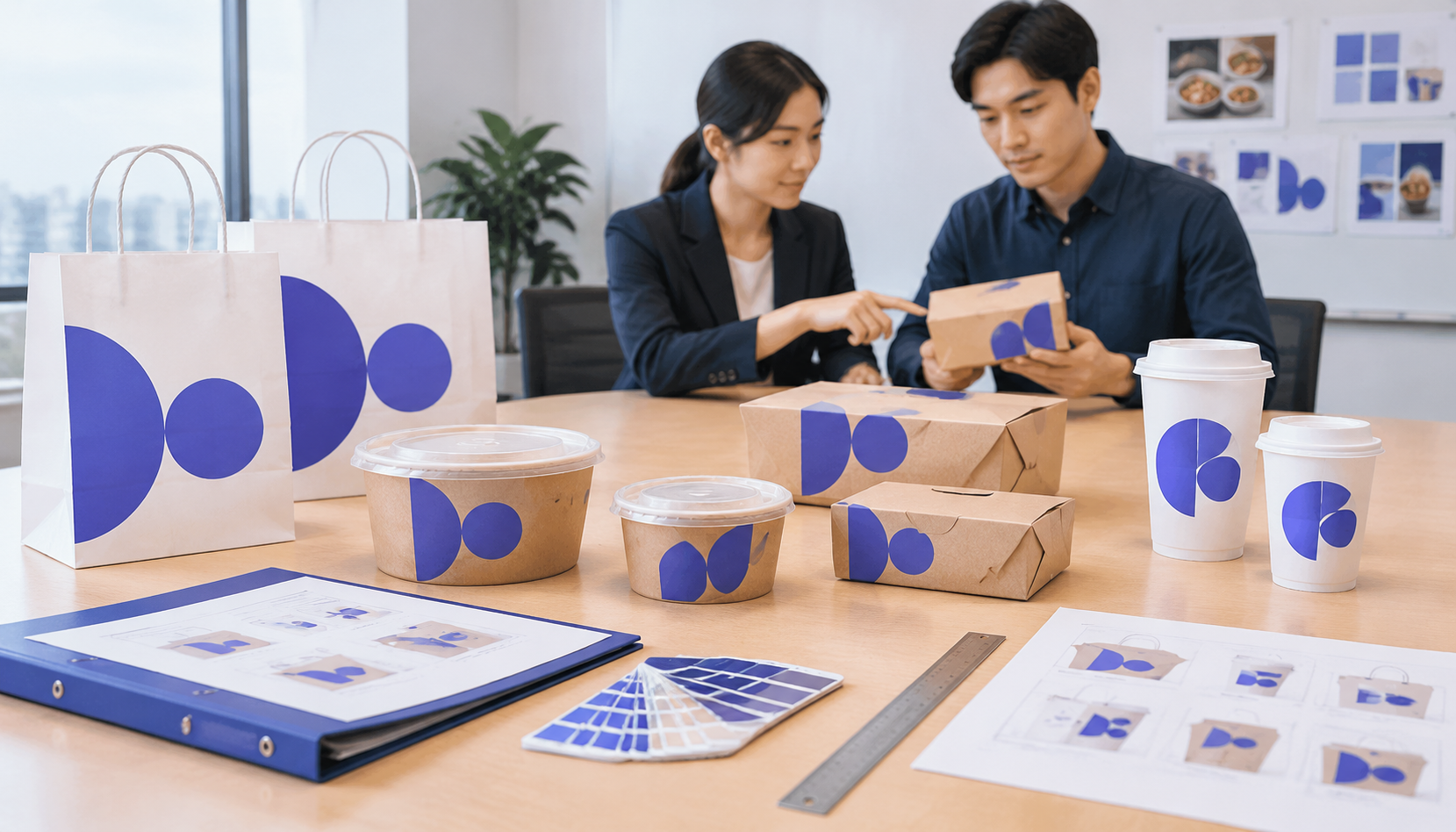
In a B2B context, packaging acts as a silent salesman. Customizing your aluminum foil food containers can elevate brand perception.
Embossing
We can emboss your company logo or a specific pattern directly into the base or sidewalls of the container. This adds a premium tactile feel and brand ownership without the use of inks.
Colored Lacquers
Standard aluminum is silver, but coated aluminum is gaining popularity. Food-safe lacquers can be applied to the exterior (gold, black, copper) or interior.
- Benefits: Aesthetic differentiation (e.g., black and gold for premium lines) and increased corrosion resistance for highly acidic foods.
Printed Lids
While printing directly on the wrinkle-wall container is difficult, the lid offers a prime billboard. Whether using paperboard lids or heat-seal films, high-resolution printing allows for branding, nutritional information, and cooking instructions to be displayed clearly.
6. Manufacturing and Quality Assurance
Understanding the manufacturing process helps buyers appreciate the quality control measures required for food-grade packaging.
Lubrication
During the stamping process, aluminum foil is fed through large presses. To prevent tearing, the foil is lubricated. It is critical that your supplier uses food-grade lubricants that comply with FDA or EU standards. High-quality manufacturers ensure that these lubricants are either volatile (evaporate naturally) or are strictly monitored to leave no residue.
Sterility and Hygiene
The high temperatures involved in the annealing process of aluminum foil effectively sterilize the material. However, post-production handling is key. Top-tier manufacturers pack containers immediately into dust-free sleeves to maintain hygiene until they reach your kitchen.
Rigidity Testing
Quality control involves testing the container’s ability to hold weight without collapsing. This is particularly important for “heavy-duty” catering trays. If a tray buckles under the weight of a roast turkey, it is a safety hazard.
7. Use Cases by Industry
Bakery and Confectionery
Aluminum is ideal for items that are baked and sold in the same container. It eliminates the need to transfer delicate pastries from a baking pan to a serving box, reducing labor and breakage.
Airline and Institutional Catering
Weight is a primary concern for airlines. Aluminum is lightweight yet rigid enough to stack in galley carts. The ability to go from cold storage to a convection oven makes it the standard for in-flight hot meals.
Ready-to-Eat (RTE) and Retail
Supermarkets require packaging that looks good on the shelf and extends shelf life. Smooth-wall containers with heat-sealed films are the preferred choice here, often used for marinated meats, seafood, and premium pasta dishes.
8. Buyer’s Guide: How to Source Effectively
When you are ready to place an order, consider the following logistical factors to ensure a smooth procurement process.
Minimum Order Quantities (MOQ)
Because aluminum foil containers are produced on high-speed automated presses, MOQs are typically higher for custom sizes or printed items compared to stock items. For standard sizes, wholesale volumes are more flexible, but custom tooling will require significant volume to amortize the mold cost.
Lead Times
Standard items may be in stock, but custom embossing or specific colored coatings will add to the lead time. Always factor in shipping times for international freight.
Shipping and Storage Efficiency
One of the logistical advantages of foil containers is their high “nestability.” They stack very tightly, meaning you can ship and store thousands of units in a relatively small footprint compared to foam or rigid plastic containers. This reduces warehousing costs.
Requesting Samples
Never commit to a large bulk order without testing. Request samples to verify:
- Gauge thickness: Does it feel sturdy enough for your specific food product?
- Lid fit: Does the lid snap on or crimp securely?
- Volume: Does your standard portion size fit correctly?
You can learn more about our process on our how to order page.
9. Sustainability and Environmental Impact
Sustainability is a major purchasing driver. Aluminum offers a distinct advantage: it is infinitely recyclable. Unlike plastic, which degrades in quality with each cycle, aluminum retains its properties.
- Circular Economy: Aluminum containers can be recycled and returned to the shelf in as little as 60 days.
- Resource Efficiency: Modern manufacturing techniques have allowed for “down-gauging”—making containers thinner and lighter without sacrificing strength, using less material overall.
Communicating this recyclability to your end customers can be a strong selling point for your brand.
10. Frequently Asked Questions (FAQ)
1. Can aluminum foil containers be used in the microwave?
Traditionally, metal was banned from microwaves. However, modern shallow aluminum containers can be used safely in microwaves manufactured after 1980, provided the container does not touch the walls of the microwave and is essentially full of food. However, for general consumer safety, many brands still recommend oven use only. Always consult with the manufacturer’s specific guidelines.
2. Are these containers safe for acidic foods?
Uncoated aluminum can react with highly acidic foods (like tomato sauce or vinegar-based dishes) if stored for long periods, potentially causing pitting or a metallic taste. For acidic applications, we recommend lacquered or coated aluminum containers which provide a protective barrier.
3. What is the difference between H-temper and O-temper?
O-temper is annealed and soft, allowing for easy folding and crimping. H-temper is strain-hardened, making it stiffer and stronger. Most standard takeout containers use a temper that balances formability with rigidity.
4. How do I seal these containers?
Standard wrinkle-wall containers are sealed using foil-laminated board lids that are crimped manually or by a closing machine. Smooth-wall containers are typically sealed using a heat-sealing machine and a compatible film.
5. Can I get custom shapes?
Yes, custom shapes (e.g., star shapes, specific compartment layouts) are possible but require the creation of a new mold. This involves a tooling cost and higher MOQs.
6. Do aluminum containers cause freezer burn?
Aluminum is an absolute barrier to moisture and air. If sealed correctly, it offers superior protection against freezer burn compared to plastic or paper, which are permeable over time.
7. What is the shelf life of food in foil containers?
The container itself does not expire. The shelf life of the food depends on the sealing method. A heat-sealed smooth-wall container (MAP) can extend shelf life significantly (days to weeks) for fresh products, whereas a standard crimped lid is intended for short-term consumption.
Conclusion
Choosing the right aluminum foil food container is a balance of functionality, aesthetics, and cost. From the robust barrier properties that protect food quality to the infinite recyclability that supports sustainability goals, aluminum remains a premier choice for the food industry.
At YBJ Packing, we specialize in providing high-quality, food-grade aluminum solutions tailored to the needs of wholesalers, distributors, and large-scale food operations. Whether you need standard takeout trays or custom-branded solutions, our team is ready to assist you with technical specs and logistics.
Ready to optimize your packaging supply chain? Contact us today to request a quote or get a sample of our premium aluminum foil containers.