

Introduction: The Shift to Premium Paper Packaging in Sushi Delivery
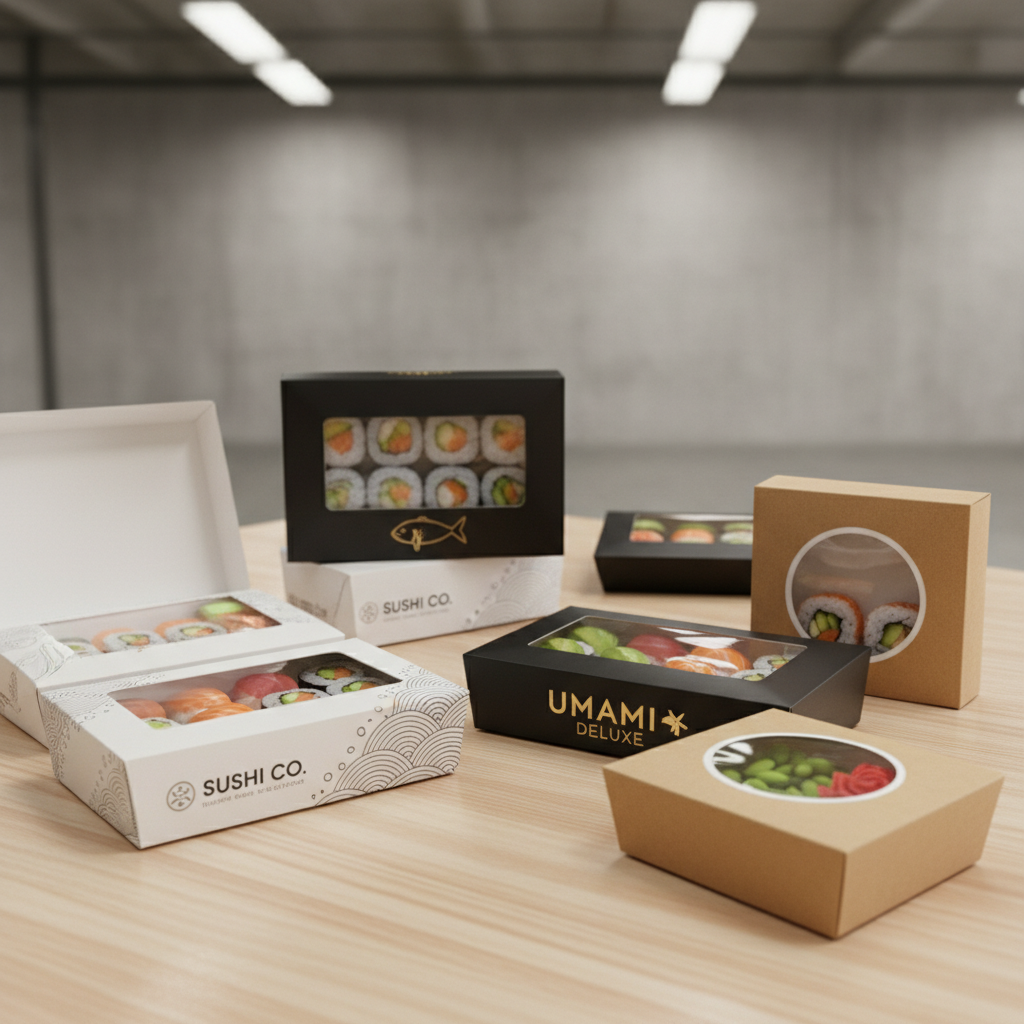
For restaurants, catering chains, and food distributors, packaging is no longer just a vessel; it is a critical component of brand identity and operational efficiency. In the sushi market, where presentation and freshness are paramount, the transition from generic plastic trays to custom sushi paper boxes represents a significant upgrade in customer experience and environmental responsibility.
However, sourcing these boxes at a wholesale level involves navigating a complex array of specifications. Buyers must balance structural integrity, grease resistance, print quality, and cost-effectiveness. A box that collapses under the weight of a heavy roll or leaks soy sauce during transit can damage a brand’s reputation instantly.
This guide provides a comprehensive technical overview for procurement officers and business owners looking to source custom sushi paper boxes. We will cover material grades, essential coatings for moisture control, printing technologies, and the logistical considerations of bulk ordering.
1. Material Specifications: Choosing the Right Substrate
The foundation of any high-quality sushi box is the base paper material. Unlike dry goods, sushi requires packaging that can withstand varying temperatures and moisture levels without losing rigidity.
Food-Grade Ivory Board (SBS)
Solid Bleached Sulfate (SBS), often referred to as Ivory Board or White Cardboard, is the industry standard for premium sushi packaging. It is produced from bleached virgin wood pulp.
- Appearance: Bright white surface on both sides, offering excellent printability for vibrant logos and high-resolution imagery.
- Hygiene: Being virgin pulp, it is odorless and clean, making it ideal for direct food contact.
- Typical GSM: For sushi boxes, a weight between 250gsm and 350gsm is standard. Larger platters may require 400gsm for added stability.
Natural Kraft Paper (Virgin or Recycled)
Kraft paper offers a rustic, eco-friendly aesthetic that appeals to health-conscious consumers. It is stronger than standard paper due to the kraft pulping process.
- Virgin Kraft: Stronger and cleaner, suitable for direct food contact. It has a smoother texture than recycled variants.
- Recycled Kraft: Often used for the outer layer of corrugated boxes or secondary packaging. If used for direct food contact, it typically requires a barrier coating to ensure safety and prevent grease absorption.
Corrugated Fiberboard (E-Flute or F-Flute)
For large party platters or heavy catering orders, standard cardstock may flex too much. Micro-flute corrugated board (E-flute or F-flute) provides superior structural strength and insulation.
- Stacking Strength: Excellent for delivery orders where boxes are stacked.
- Thermal Properties: The air gaps in the fluting provide mild insulation, keeping tempura rolls warm or sashimi cool for slightly longer.
2. Essential Coatings: Managing Moisture and Grease
Sushi presents a unique challenge: wet rice, oily fish, sauces (spicy mayo, unagi sauce), and condensation from refrigeration. Uncoated paper will absorb these fluids, becoming soggy and weak. Wholesale buyers must specify the correct barrier coatings.
PE (Polyethylene) Coating
This is the most common lining for food packaging.
- Function: A thin layer of plastic (usually 10–20gsm) is laminated onto the paperboard. It provides a robust barrier against water and oil.
- Pros: Cost-effective, excellent heat sealing capabilities, and high durability.
- Cons: Makes the box difficult to recycle in standard paper streams unless the facility has specialized separation equipment.
PLA (Polylactic Acid) Coating
For brands focused on sustainability, PLA is a bioplastic derived from renewable resources like corn starch.
- Function: Similar grease and water resistance to PE.
- Pros: Industrially compostable and biodegradable.
- Cons: Higher cost and lower heat tolerance (though generally sufficient for cold or warm sushi).
Aqueous Dispersion Coating
A water-based coating that provides a moderate barrier.
- Pros: Fully recyclable and repulpable without specialized separation.
- Cons: Generally offers lower resistance to heavy grease or prolonged moisture exposure compared to PE or PLA. Best for “dry” rolls or short delivery times.
3. Structural Design Options
The structure of the box affects assembly speed in the kitchen and presentation at the dining table. When browsing our food packaging box category, consider these common configurations.
Window Patching
Visibility is a key sales driver for sushi, especially in grab-and-go retail environments (supermarkets, airports).
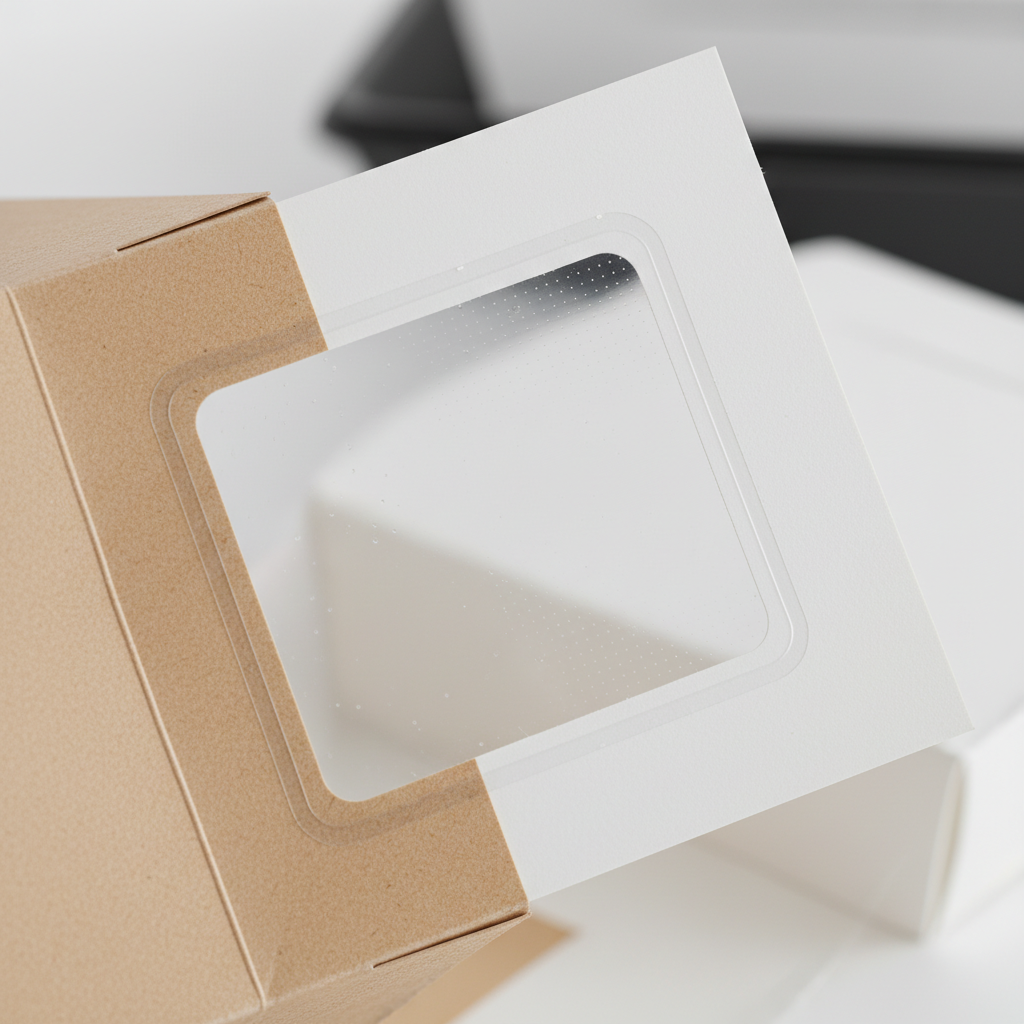
- Material: Windows are typically made from PET (clear, strong) or PLA (eco-friendly).
- Anti-Fog: It is highly recommended to specify anti-fog treatment for the window film. Sushi is often refrigerated, and temperature changes can cause standard film to cloud up, obscuring the product.
Glued vs. Fold-Flat Designs
- Pre-Glued (Crash Bottom/4-Corner): These boxes pop open instantly. They minimize labor time during a busy dinner rush but may take up slightly more space in shipping if not designed to fold perfectly flat.
- Flat-Packed (Fold-It-Yourself): These are cheaper to ship and manufacture. However, they require staff time to assemble. This trade-off should be calculated based on your labor costs versus storage capabilities.
Separate Lid vs. Attached Lid (Clamshell)
- Clamshell: One-piece design. Faster to close, lower inventory management (only one SKU).
- Separate Lid and Base: Premium presentation. Allows for mixing and matching colors (e.g., black base with a clear or kraft lid). Often used for high-end Omakase sets.
4. Sizing and Capacity Guidelines
Standardization helps reduce costs, but custom sizing ensures your specific menu items fit perfectly without sliding. Loose sushi can arrive damaged, while tight boxes crush the rice.
| Box Type | Approximate Dimensions (L x W x H) | Typical Capacity |
|---|---|---|
| Small / Individual | 160 x 90 x 45 mm | 1 Roll (6-8 pieces) or 4 Nigiri |
| Medium / Standard | 180 x 120 x 45 mm | 2 Rolls or 1 Bento Combo |
| Large / Family | 220 x 160 x 50 mm | 3-4 Rolls or Assorted Sashimi |
| Party Platter | 300 x 300 x 55 mm | Party Set (40+ pieces) |
Note: Dimensions are indicative. Custom tooling allows for precise measurements to match your specific roll diameter.
5. Printing and Customization Technologies
Branding is the primary reason buyers switch to custom packaging. Understanding print methods helps in managing budget and quality expectations.
Offset Printing (Lithography)
The gold standard for high-quality wholesale packaging.
- Best For: High-volume orders (10,000+ units) requiring photographic quality, gradients, and precise color matching.
- Process: Uses plates to transfer ink. High setup cost, but low unit cost at volume.
- Finishes: Supports a wide range of post-print finishes like Spot UV (glossy highlights on logos), Matte Lamination (smooth, premium feel), and Embossing/Debossing.
Flexographic Printing
Common for simpler designs on kraft paper or corrugated board.
- Best For: Simple logos, patterns, and high-volume runs where cost is the primary driver.
- Quality: Lower resolution than offset; not suitable for complex photos.
Digital Printing
Ideal for short runs or rapid prototyping.
- Best For: Small campaigns, seasonal promotions, or testing a new design before committing to mass production.
- Cost: High unit cost, but zero setup/plate fees.
6. Quality Control and Manufacturing Standards
When evaluating a supplier for wholesale sushi boxes, specific quality checks are necessary to ensure the product performs in a commercial kitchen environment.
Grease Resistance Testing (Kit Level)
Paper grease resistance is often measured by “Kit levels” (scale of 1-12). For sushi, which involves oils from fish and mayonnaise, a Kit level of 7 or higher is typically recommended if no plastic coating is used. If a PE coating is applied, the physical barrier provides complete protection.
Odor and Taint Testing
Sushi has a delicate flavor profile. Low-quality inks or adhesives can transfer chemical odors to the food (migration). Ensure your supplier uses food-safe, low-migration inks (often soy or vegetable-based) and food-grade adhesives.
Locking Mechanism Integrity
For folded boxes, the locking tabs must be precise. If the die-cutting is off by even a millimeter, the box may pop open during delivery. Request samples to test the assembly speed and lock security.
7. Logistics and Buying Guide
Minimum Order Quantities (MOQ)
Custom packaging requires setting up production lines.
- Small Run (Digital): 500 – 2,000 units. High cost per unit.
- Standard Run (Offset): 5,000 – 10,000 units. Balanced cost.
- Volume Run: 30,000+ units. Lowest cost per unit, best for chains.
Lead Times
Production typically takes 2–4 weeks after artwork approval. Shipping times vary by method (Air vs. Sea). Plan ahead for seasonal spikes (e.g., New Year’s or Valentine’s Day) to avoid stockouts.
Artwork Preparation
To ensure a smooth ordering process, have your design files ready in vector format (AI, PDF, or EPS). Define your brand colors using Pantone (PMS) codes to ensure the printed box matches your brand identity exactly.
8. Step-by-Step Ordering Checklist
- Define Usage: Is this for dine-in leftovers (short term) or delivery (long term)?
- Select Material: White Cardboard (premium) or Kraft (eco-look).
- Determine Size: Measure your most popular rolls.
- Choose Coating: PE for maximum safety, PLA for eco-marketing.
- Design: Prepare vector artwork.
- Sample: Always request a physical prototype to test fit and material feel.
- Order: Confirm MOQ and shipping terms (Incoterms).
Frequently Asked Questions (FAQ)
1. Can sushi boxes be microwaved?
It depends on the coating. Standard PE-coated boxes are generally microwave-safe for short reheating periods, but boxes with foil stamping or certain metallic inks are not. Always specify “microwave safe” requirements during the quote phase.
2. What is the difference between “biodegradable” and “compostable”?
Biodegradable means it breaks down eventually, but may leave microplastics. Compostable (specifically certified industrial compostable) means it breaks down into non-toxic organic matter under specific conditions. PLA-lined boxes are often compostable.
3. How do I prevent the sushi rice from sticking to the box?
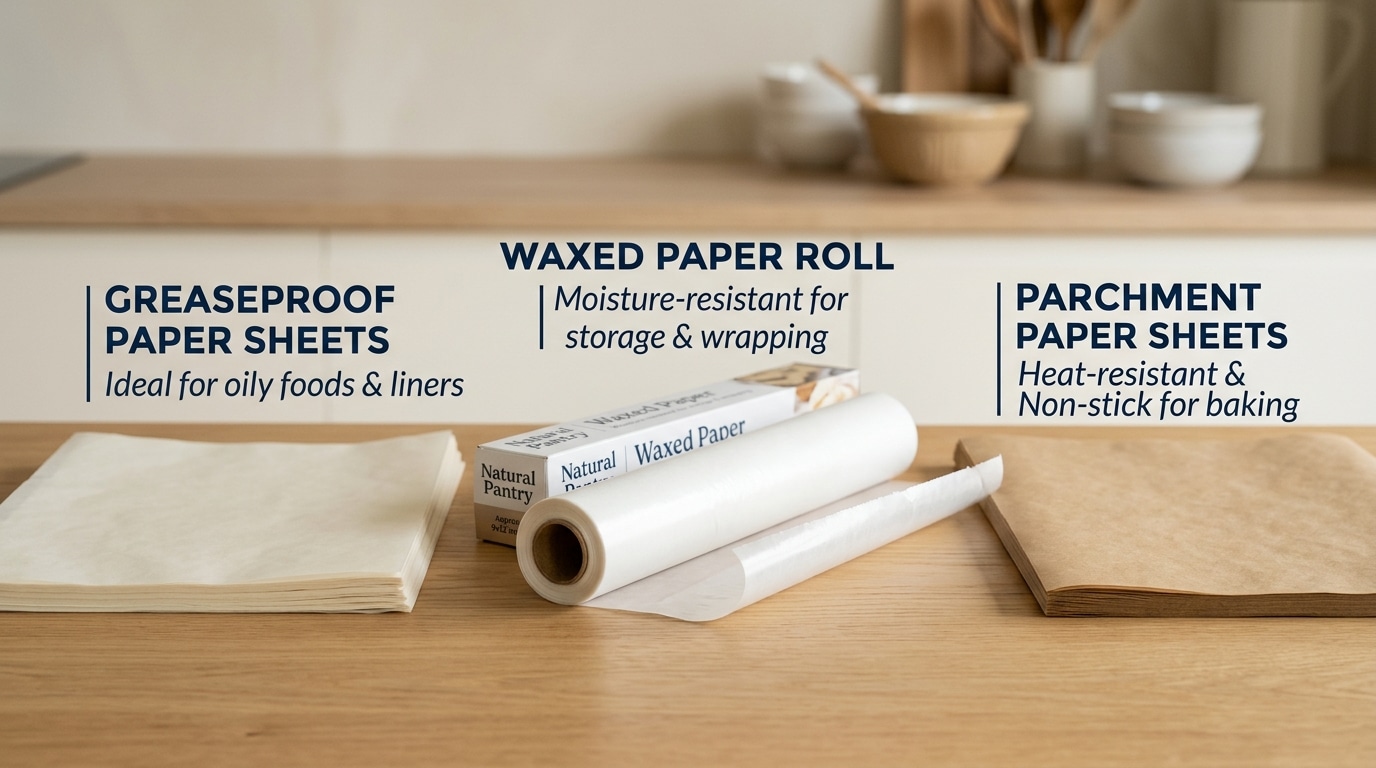
A high-quality internal coating (PE or PLA) usually prevents sticking. For added protection, many chefs use a small sheet of wax paper or a decorative leaf (baran) at the bottom.
4. Can you print inside the box?
Yes, but it requires food-safe inks and often an additional coating over the ink to prevent direct contact with the food. This adds to the cost but offers a premium unboxing experience.
5. Do you offer custom shapes?
Yes, custom die-cutting allows for unique shapes, handles, or window placements. This requires a one-time tooling fee for the new mold.
6. How are the boxes shipped?
Boxes are shipped flat-packed to minimize volume and freight costs. They must be assembled on-site.
7. Can I get a sample before a full order?
Yes. We recommend getting a plain sample to check structure and size, or a digital proof sample to check print placement. Visit our how to order page for details on sampling policies.
Conclusion
Switching to custom sushi paper boxes is a strategic move that enhances brand perception and supports sustainability goals. By understanding the technical aspects—from GSM weights to barrier coatings—buyers can make informed decisions that ensure food quality remains high from the kitchen to the customer’s door.
At YBJ Packing, we specialize in helping businesses scale their packaging operations with reliable, food-grade solutions. Whether you need a standard kraft box or a high-end luxury sushi container with gold foil stamping, our team is ready to assist.
Ready to upgrade your packaging? Contact us today to request a quote or get a sample sent to your facility.