

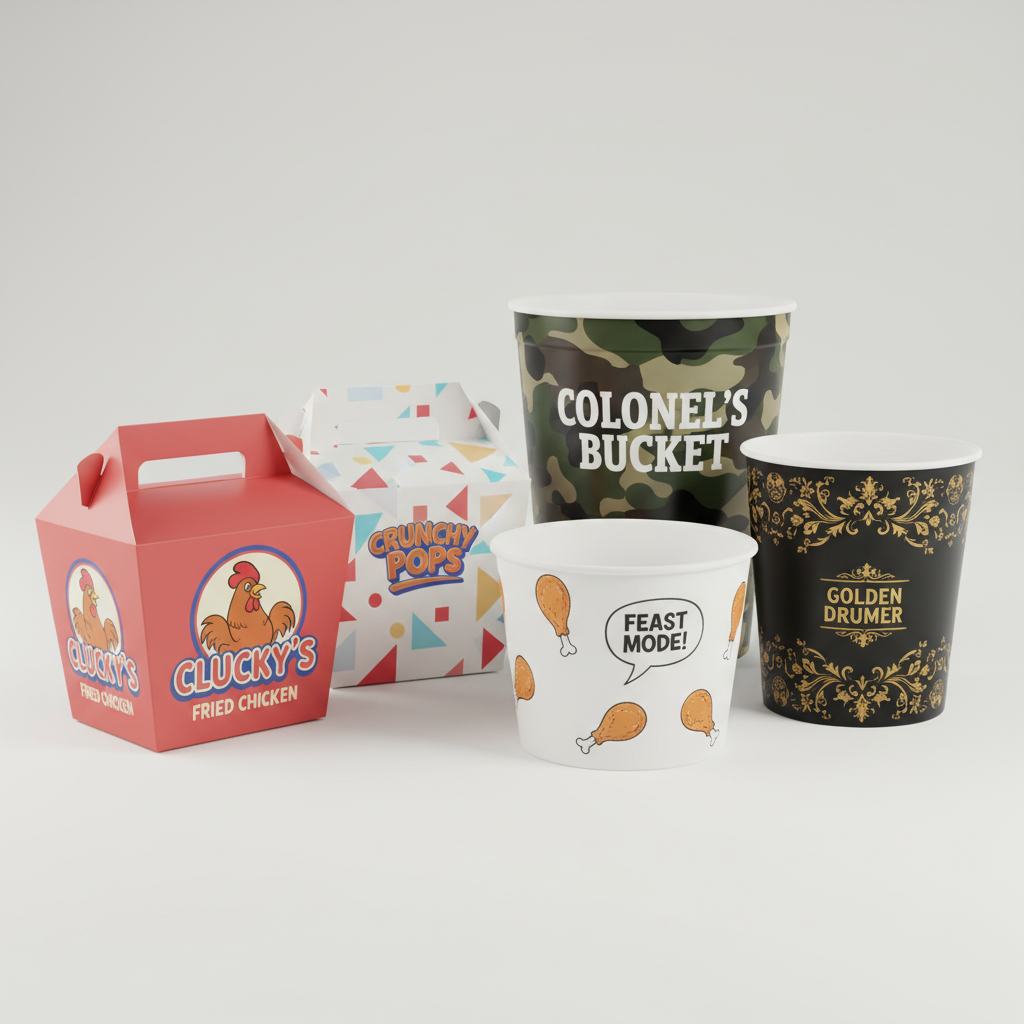
In the competitive world of Quick Service Restaurants (QSR) and fast-casual dining, the packaging you choose serves two critical functions: preserving the integrity of the food and acting as a mobile billboard for your brand. For fried chicken specifically, the technical demands on packaging are higher than for almost any other food item. The box must manage steam to keep the crust crispy, resist grease penetration to prevent staining, and maintain structural rigidity under high heat.
Sourcing custom fried chicken boxes wholesale is a strategic decision that impacts your operational costs, customer satisfaction, and brand perception. This comprehensive guide is designed for procurement officers, restaurant owners, and operations managers. We will explore the technical specifications of food-grade paperboard, the nuances of grease-resistant coatings, printing technologies for high-impact branding, and the logistics of bulk ordering.
The Technical Challenge: Why Fried Chicken Packaging is Unique
Fried chicken presents a complex packaging problem. It leaves the fryer at high temperatures, releasing significant moisture (steam) and oil. If the packaging seals too tightly, the steam condenses, turning a crispy coating soggy within minutes. If the material is too porous or lacks the correct coating, grease will seep through, compromising the box’s structure and staining the customer’s hands or car seats.
Effective custom fried chicken boxes must balance ventilation with insulation. They require materials that are food-safe, durable, and increasingly, environmentally sustainable. Understanding these technical requirements is the first step in selecting the right wholesale manufacturer.
Material Specifications for Fried Chicken Boxes
When ordering wholesale, you aren’t just buying “cardboard.” You are specifying a substrate engineered for food service. The choice of material dictates the box’s strength, print quality, and grease resistance.
1. Paperboard Grades
- Solid Bleached Sulfate (SBS): This is the premium standard for high-quality custom packaging. SBS is a virgin paperboard made from bleached chemical pulp. It is white throughout, providing an excellent surface for vibrant printing. It is odorless and tasteless, making it ideal for direct food contact.
- Coated Unbleached Kraft (CUK) / Natural Kraft: Made from unbleached wood pulp, this material has a natural brown appearance. It is exceptionally strong and tear-resistant. Many brands choose Kraft to signal eco-friendliness. While it prints well, colors may appear darker or more muted compared to SBS.
- Folding Box Board (FBB): A multi-ply board often with a bleached chemical pulp top layer and mechanical pulp middle layers. It offers high stiffness and bulk at a lower weight (and cost) than solid boards.
2. Thickness and Weight (GSM)
The durability of the box is determined by the paper’s Grams per Square Meter (GSM) and caliper (thickness). For fried chicken boxes, the material must support the weight of the food without buckling.
- Small Boxes (1-2 pieces): Typically 230gsm to 280gsm.
- Medium/Large Boxes (Family meals, 8-12 pieces): Typically 300gsm to 400gsm.
- Buckets: Often require heavier stock or double-wall construction depending on the volume.
3. Grease Resistance and Coatings
Raw paper absorbs oil. To prevent this, specific barriers are applied.
- PE (Polyethylene) Coating: A thin layer of plastic applied to the inside of the box. It provides a robust barrier against grease and moisture. It is the industry standard for performance but can complicate recycling processes in some regions.
- Aqueous Coating: A water-based coating that offers moderate grease resistance. It is generally more eco-friendly than PE but may not hold up as well for extremely oily foods over long durations.
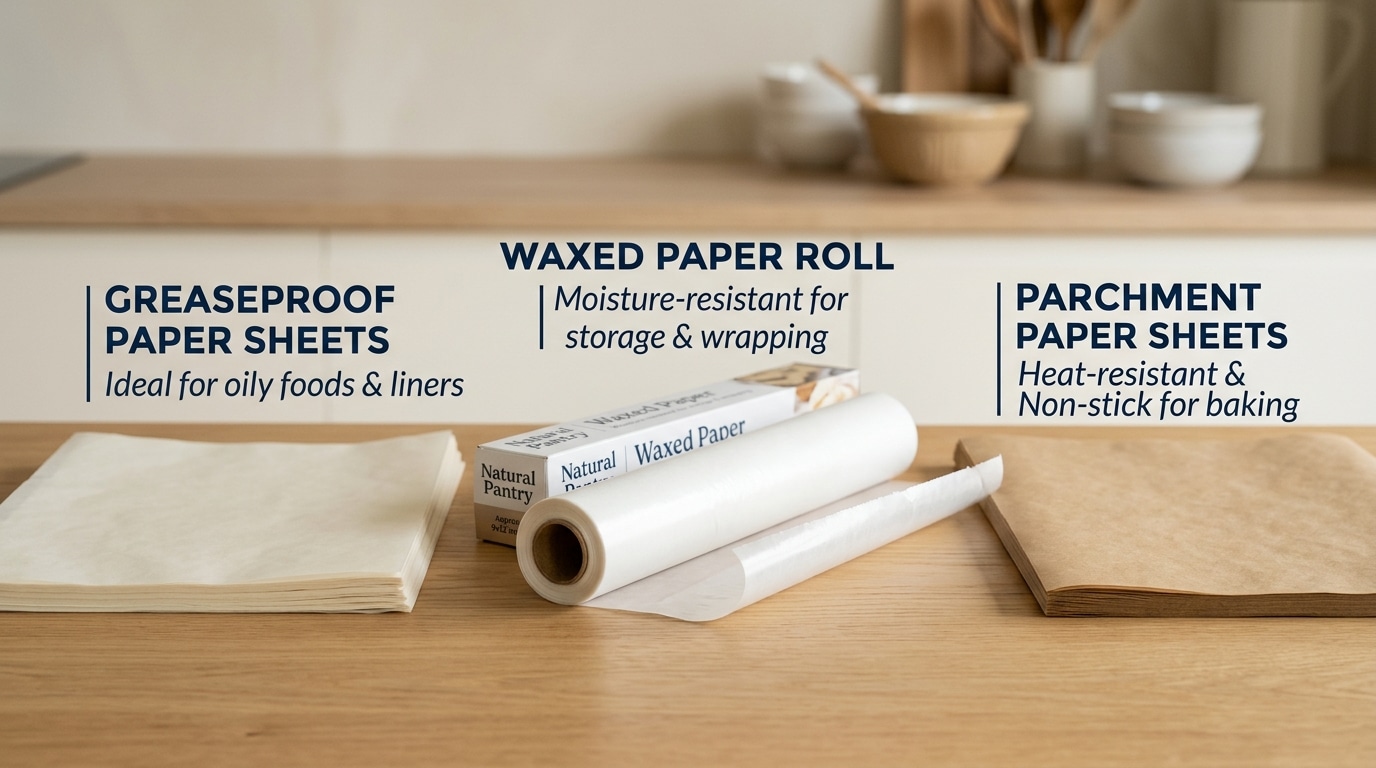
- Wax Coating: Historically common but falling out of favor due to recycling difficulties.
- Dispersion Barrier Coatings: Newer, plastic-free alternatives that provide grease resistance while remaining fully repulpable and compostable.
Structural Design Options
The physical design of the box affects assembly speed in the kitchen, stackability during transport, and the customer’s eating experience. Explore our wider range of food packaging box options to see how different structures serve different menu items.
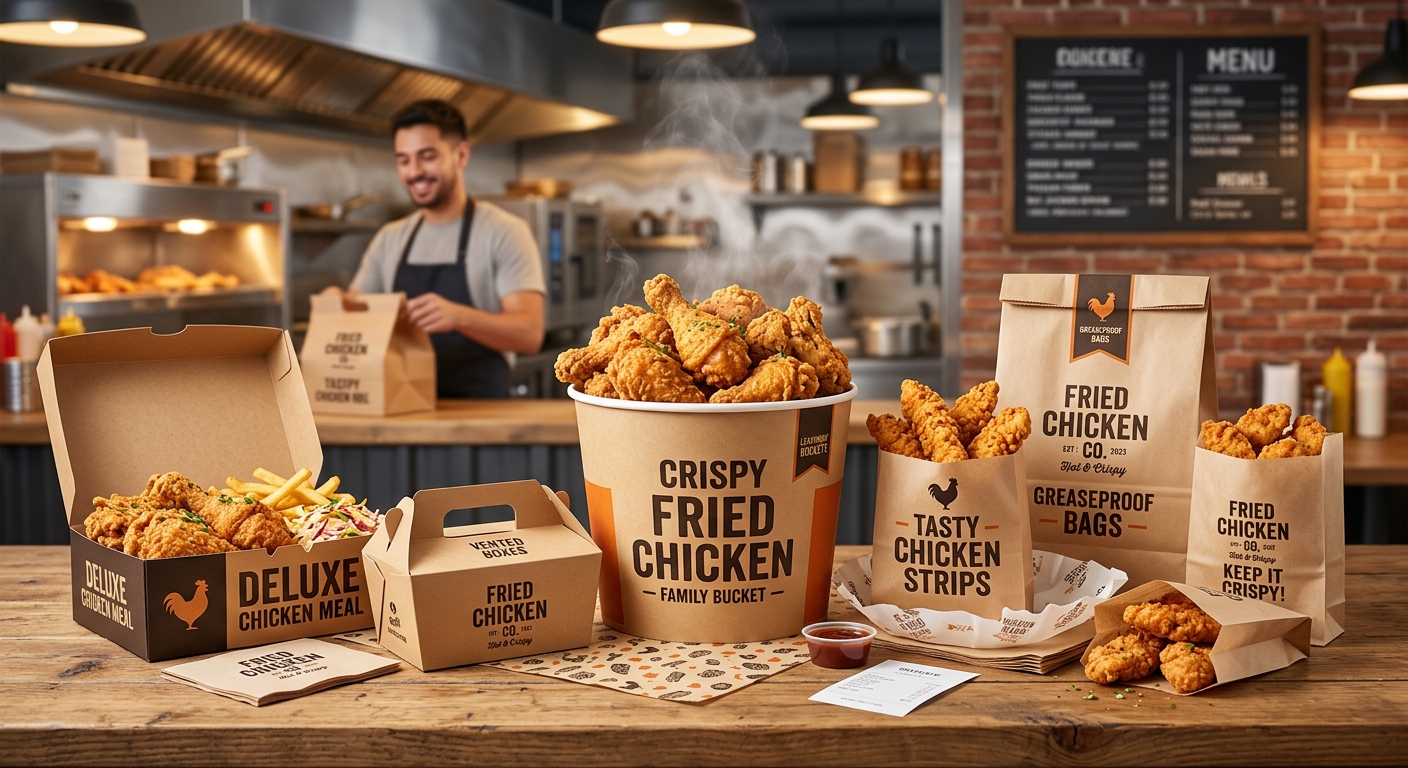
Gable Top (The “Barn” Box)
This is the iconic fried chicken box shape. The handle allows for easy carrying, and the gable shape naturally creates ventilation gaps at the top.
- Pros: Excellent branding space, easy for customers to carry, stackable before assembly.
- Cons: Requires assembly time (though auto-bottom designs mitigate this).
Tuck Top / Clamshell
Often used for smaller portions or combos (e.g., chicken and fries).
- Pros: Very fast to pack, compact.
- Cons: Can crush if stacked too high with heavy contents; ventilation must be carefully engineered.
Bucket with Lid
The standard for family-sized meals.
- Pros: High volume capacity, extremely sturdy.
- Cons: Higher shipping volume (unless tapered and nested), requires a separate lid component.
Ventilation Engineering
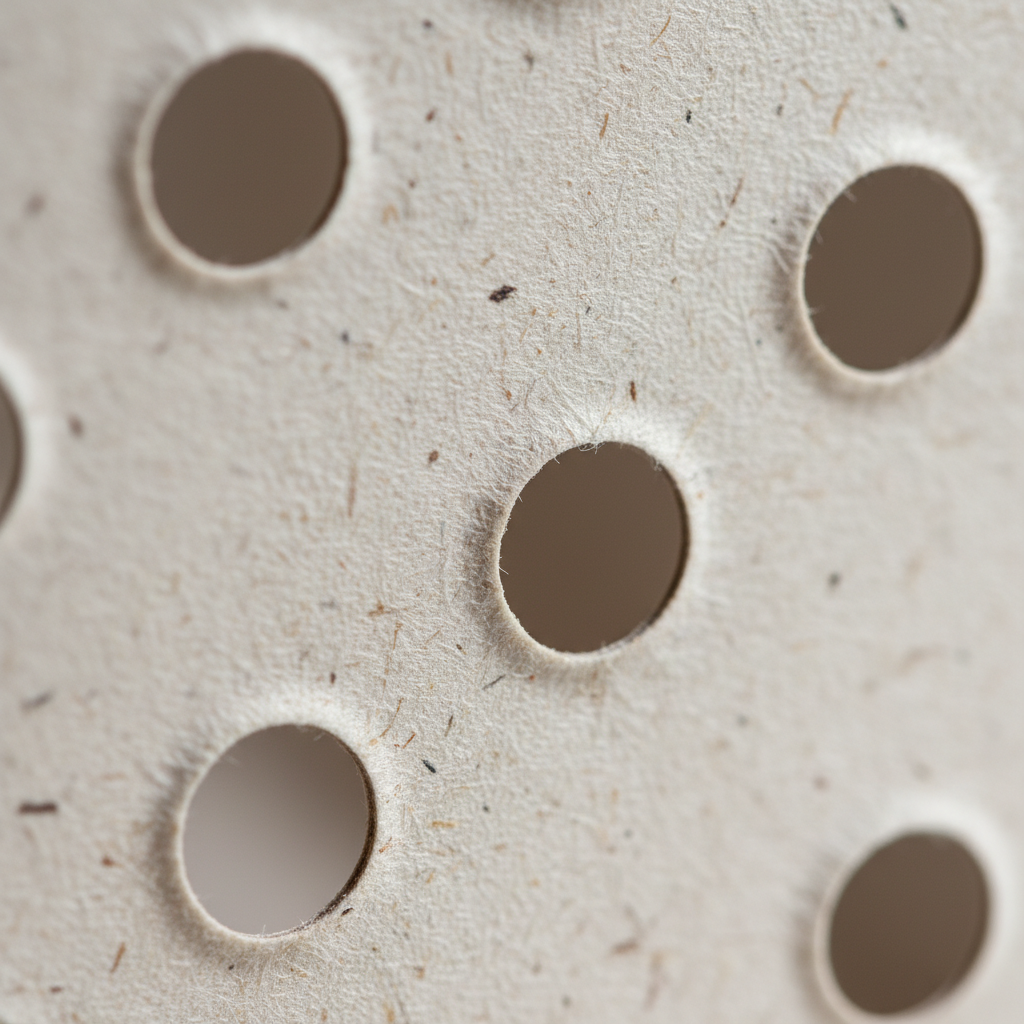
Steam is the enemy of crispy skin. Custom boxes should feature die-cut ventilation holes. The placement is strategic: usually on the sides or back to allow steam to escape without compromising the structural integrity or allowing grease to leak out.
Printing Technologies and Branding
Wholesale custom packaging is an investment in marketing. The print quality reflects the quality of the food inside.
Offset Printing (Lithography)
The gold standard for high-volume wholesale orders. It involves transferring an inked image from a plate to a rubber blanket, then to the printing surface.
- Best for: High-resolution imagery, complex gradients, and exact color matching (Pantone/PMS).
- MOQ: Typically higher (often 5,000+ units) due to setup costs.
- Quality: Superior sharpness and detail.
Flexographic Printing
Uses flexible relief plates. It is commonly used for simpler designs, logos, and patterns on Kraft material.
- Best for: High-speed production, simple vector graphics, solid colors.
- Cost: Generally lower per unit for very large runs.
Digital Printing
Direct-to-substrate printing without plates.
- Best for: Short runs, prototyping, or limited-time promotions.
- Cost: Higher per unit, but zero setup fees.
Finishing Touches
To make your brand stand out, consider post-print finishes:
- Spot UV: A glossy coating applied to specific areas (like a logo) to make them pop against a matte background.
- Embossing/Debossing: Creating a raised or recessed texture for a premium tactile feel.
- Foil Stamping: Adding metallic gold or silver elements (common for premium or gourmet brands).
Buying Guide: Ordering Wholesale
Navigating the procurement process for custom packaging requires attention to detail. Here is a step-by-step guide to ensuring you get exactly what you need.
1. Determine Your Size Requirements
Before contacting a supplier, analyze your menu mix. Do not guess dimensions. Measure your food portions accurately.
- Single Meal: Typically fits 2-3 pieces plus a side.
- Dinner Box: Fits 3-5 pieces plus sides/biscuit.
- Family Box: Fits 8-12 pieces.
Tip: Request unprinted samples of standard sizes to test with your actual food product before committing to a custom mold.
2. Minimum Order Quantities (MOQ)
In wholesale manufacturing, volume drives price.
- Low Volume (500 – 2,000 units): Often restricted to digital printing or stock boxes with stickers. High unit cost.
- Mid Volume (5,000 – 10,000 units): Opens up offset printing options. Better unit pricing.
- High Volume (50,000+ units): Lowest unit cost, full customization of structure and size allowed.
3. Artwork and Design Files
To ensure production speed, have your artwork ready. Manufacturers typically require:
- Format: Vector files (AI, PDF, EPS).
- Color Mode: CMYK (for process printing) or Pantone (for spot colors).
- Bleed: Artwork must extend beyond the cut line (usually 3mm) to account for cutting tolerance.
4. Lead Times and Logistics
Custom manufacturing takes time. A typical timeline might look like this:
- Design & Approval: 3-5 days.
- Sampling: 5-7 days.
- Mass Production: 10-20 days (depending on quantity).
- Shipping: Variable. Sea freight is cost-effective but slow (30+ days); air freight is fast but expensive.
Plan your inventory 2-3 months in advance to avoid stockouts. For detailed guidance on timelines, visit our how to order page.
Quality Assurance and Compliance
When importing or purchasing food packaging wholesale, compliance is non-negotiable.
Food Safety Certifications
Ensure the manufacturer uses FDA-compliant or EU-compliant materials. The paperboard and the inks must be safe for direct food contact. Ask about:
- Migration Testing: Ensures chemicals from the packaging do not transfer to the food.
- Heavy Metal Testing: Crucial for colored inks.
The “Kit Test” for Oil Resistance
The paper industry uses the “Kit Test” to measure grease resistance on a scale of 1 to 12. For fried chicken, a Kit level of 7 or higher is typically recommended to prevent oil saturation.
Sustainability in Fried Chicken Packaging
Consumer demand for eco-friendly packaging is reshaping the industry. While PE coatings are effective, they are challenging to recycle in standard paper streams. Many brands are moving toward:
- Bio-coatings: PLA (Polylactic Acid) or other biodegradable linings.
- Recycled Content: Using board with a percentage of post-consumer waste (PCW), though the top layer touching food is usually virgin fiber for safety.
- FSC Certification: Ensuring the wood pulp comes from responsibly managed forests.
Common Pitfalls to Avoid
- Ignoring Storage Space: 10,000 flat-packed chicken boxes take up roughly one pallet. 10,000 pre-assembled buckets take up significantly more. Ensure you have the warehouse capacity.
- Underestimating Grease: Choosing a cheaper, thinner board or skipping the PE coating often leads to box failure. A collapsed, greasy box ruins the customer experience.
- Complex Assembly: If your kitchen staff has to spend 30 seconds folding every box during a lunch rush, your operations will suffer. Choose auto-lock bottoms for speed.
FAQ: Custom Fried Chicken Boxes
1. Can I microwave these boxes?
It depends on the material. Standard paperboard is microwave-safe, but metallic foils or certain plastic coatings may not be. Always specify if microwaveability is a requirement so the manufacturer can use heat-resistant coatings and glue.
2. What is the difference between CMYK and Pantone printing?
CMYK builds colors by mixing Cyan, Magenta, Yellow, and Black dots. It is economical for photos. Pantone (PMS) uses pre-mixed ink formulas for precise color matching. If your brand relies on a very specific shade of red, use Pantone.
3. How do I prevent the chicken from getting soggy?
Ventilation is key. Ensure your custom design includes adequate die-cut vents. Additionally, avoid stacking boxes immediately after filling them with piping hot food, as this blocks airflow.
4. What is the standard lead time for a custom order?
After artwork approval, production typically takes 2-3 weeks. Shipping time depends on your location and method (air vs. sea). We recommend planning for a 6-8 week total cycle for international orders.
5. Can you print on the inside of the box?
Yes, but it requires special food-safe inks and often an additional coating to prevent the ink from contacting the food directly. This increases the cost but offers a premium unboxing experience.
6. Do you offer samples?
Yes. We strongly recommend getting a physical sample to test size and material quality. Contact us to request a sample kit.
Conclusion
Sourcing custom fried chicken boxes wholesale is about finding the intersection of form, function, and cost. The right box protects your product, speeds up your kitchen operations, and enhances your brand visibility. By understanding the specifications—from paper GSM to grease-resistant coatings—you can make informed purchasing decisions that drive your business forward.
At YBJ Packing, we specialize in high-quality, food-grade paper packaging tailored to the needs of the food service industry. Whether you need a standard gable box or a fully custom structural design, our team is ready to assist.
Ready to upgrade your packaging? Request a quote today or browse our fried chicken box catalog to get started.