

Introduction: The Strategic Importance of Fried Chicken Packaging
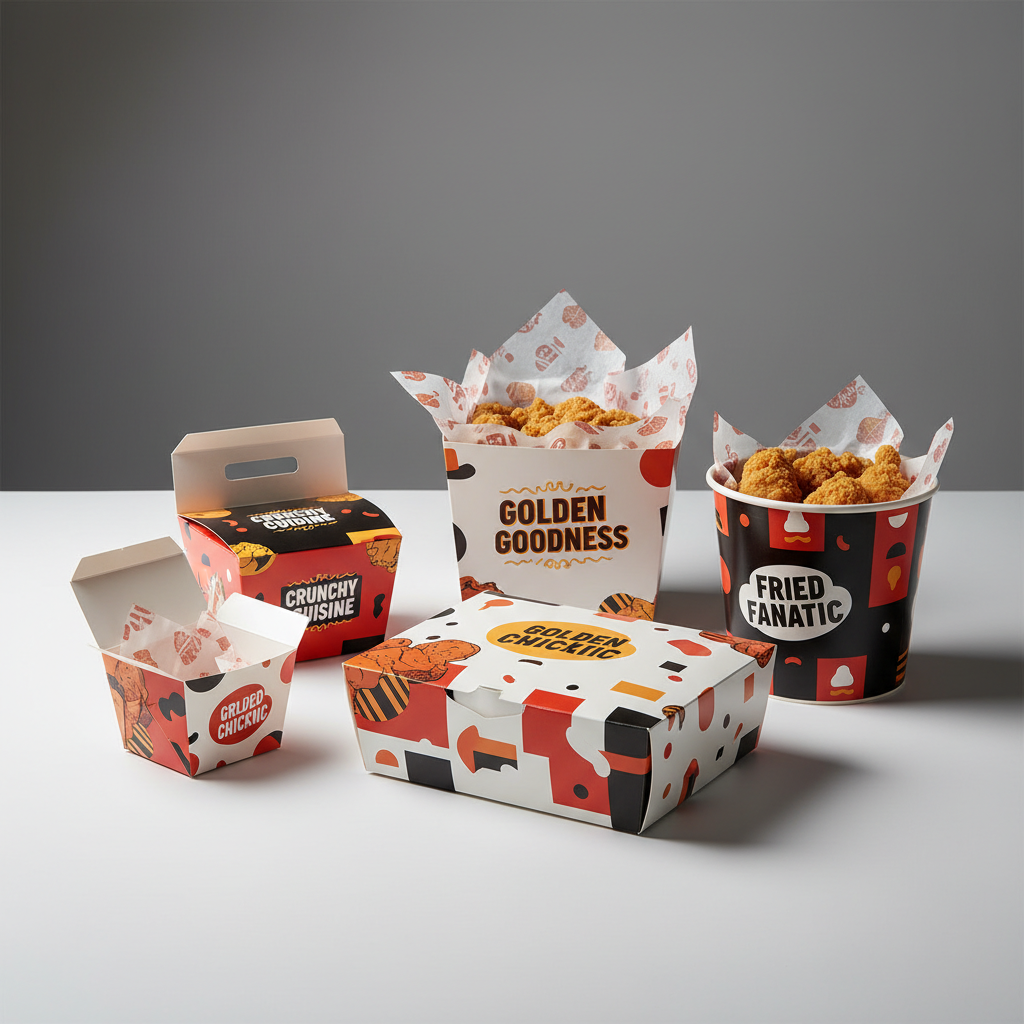
In the competitive landscape of Quick Service Restaurants (QSR) and fast-casual dining, the humble fried chicken box serves a dual purpose: it is both a vessel for food safety and a mobile billboard for brand identity. For procurement managers, restaurant owners, and packaging distributors, selecting the right packaging is not merely about aesthetics; it is a technical decision involving thermal dynamics, grease resistance, and supply chain logistics.
Fried chicken presents a unique challenge in food packaging. It requires a container that retains heat without trapping moisture—which leads to sogginess—while simultaneously preventing grease from compromising the structural integrity of the box. Furthermore, as the demand for takeout and delivery continues to surge, the durability of packaging during transit has become a critical performance metric.
This comprehensive guide explores the technical specifications, material options, and customization possibilities for custom fried chicken boxes. Whether you are sourcing for a multinational chain or a boutique franchise, understanding these factors will ensure you choose packaging that protects your product and elevates your brand.
Material Selection: The Foundation of Packaging Performance
The core of any high-performance food box is the substrate. Choosing the wrong material can lead to collapsed boxes, grease stains, and unhappy customers. Manufacturers typically offer a range of paper grades tailored to specific load-bearing and resistance requirements.
1. Virgin Ivory Board (SBS – Solid Bleached Sulfate)
Virgin Ivory Board is the gold standard for premium food packaging. It is made from bleached chemical pulp, offering a pristine white surface that is ideal for high-quality printing.
- Pros: Excellent brightness for vibrant graphics; smooth surface; odorless and hygienic.
- Best For: Brands prioritizing high-end graphics and a clean, sanitary appearance.
- Typical GSM: 250gsm to 400gsm, depending on box size.
2. Kraft Paperboard (CUK – Coated Unbleached Kraft)
Kraft paperboard is easily recognized by its brown, natural appearance. It is made from unbleached wood pulp and is renowned for its superior tear resistance and stiffness.
- Pros: High strength-to-weight ratio; eco-friendly aesthetic; excellent durability.
- Best For: Brands emphasizing organic ingredients, sustainability, or a rustic “farm-to-table” image.
- Typical GSM: 250gsm to 350gsm.
3. Corrugated Fiberboard (E-Flute or F-Flute)
For larger family meals or heavy buckets, standard paperboard may not suffice. Micro-flute corrugated board consists of a fluted layer sandwiched between two liners. This structure provides insulation and significant stacking strength.
- Pros: Superior thermal insulation (keeps food hot longer); high stacking strength; rigid protection.
- Best For: Large volume buckets, catering boxes, and delivery-heavy business models.
4. Grease-Resistant Coatings
Raw paper is porous and will absorb oil rapidly. To prevent this, food packaging boxes must be treated.
- PE (Polyethylene) Coating: A thin layer of plastic laminated onto the paper. It provides a 100% barrier against grease and moisture. It can be applied to one side (1PE) or both sides (2PE).
- Aqueous Coating: A water-based coating that offers moderate grease resistance. It is often easier to recycle than PE-lined boards but may not hold up to extremely oily foods for long periods.
- Clay Coating: Improves printability and offers a mild barrier, though usually insufficient for fried chicken without an additional liner or wax treatment.
Structural Design & Ventilation: Engineering for Crispiness
The physics of fried chicken packaging revolves around moisture management. Hot fried food releases steam. If that steam is trapped, it condenses back onto the crust, turning it soggy. If too much heat escapes, the food arrives cold. The structural design must balance these competing needs.
Ventilation Systems
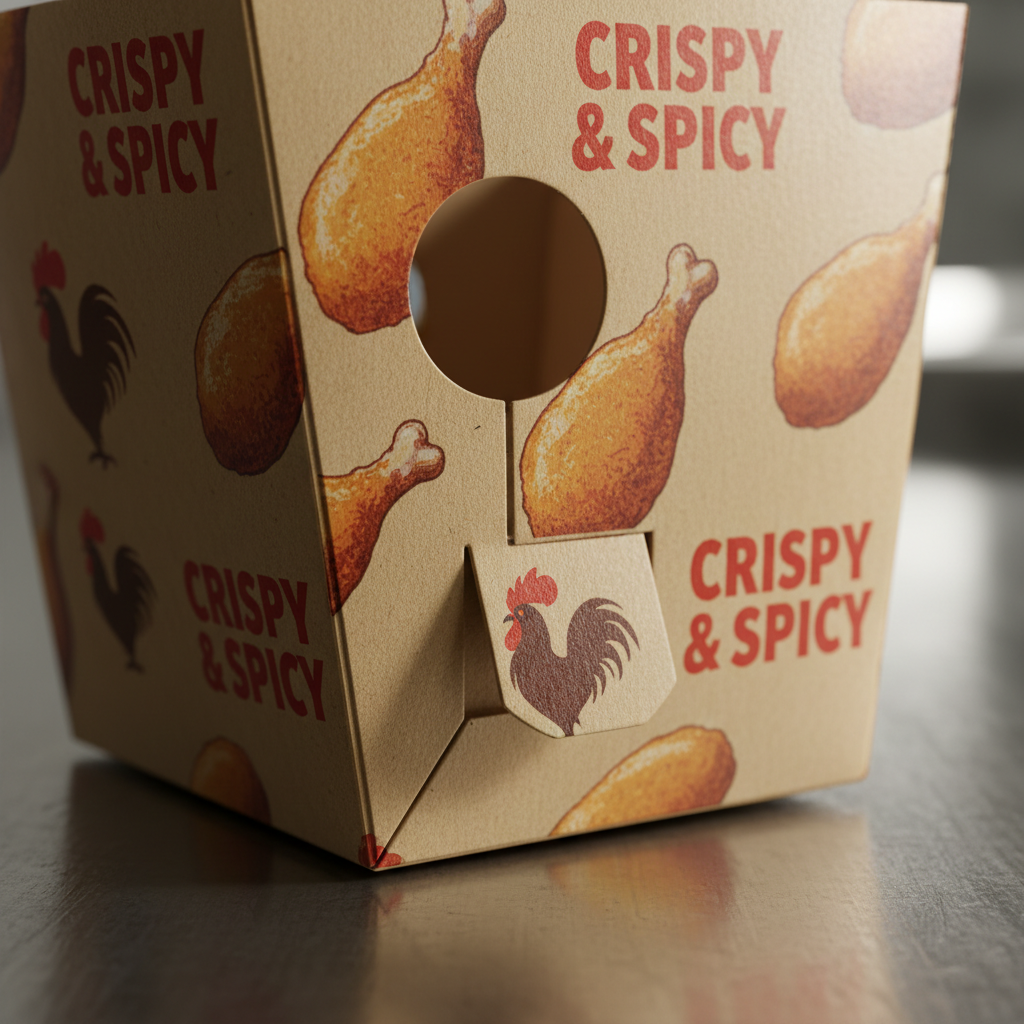
Effective fried chicken boxes feature strategically placed steam vents. These are die-cut holes, often hidden within the design or placed on the side gussets, allowing steam to escape while retaining ambient heat.
- Side Vents: Allow cross-ventilation without exposing the food directly to airborne contaminants.
- Top Vents: Allow heat to rise and escape efficiently but must be sized correctly to prevent rapid cooling.
Locking Mechanisms
Efficiency in the kitchen is paramount. Packaging that takes too long to assemble slows down service.
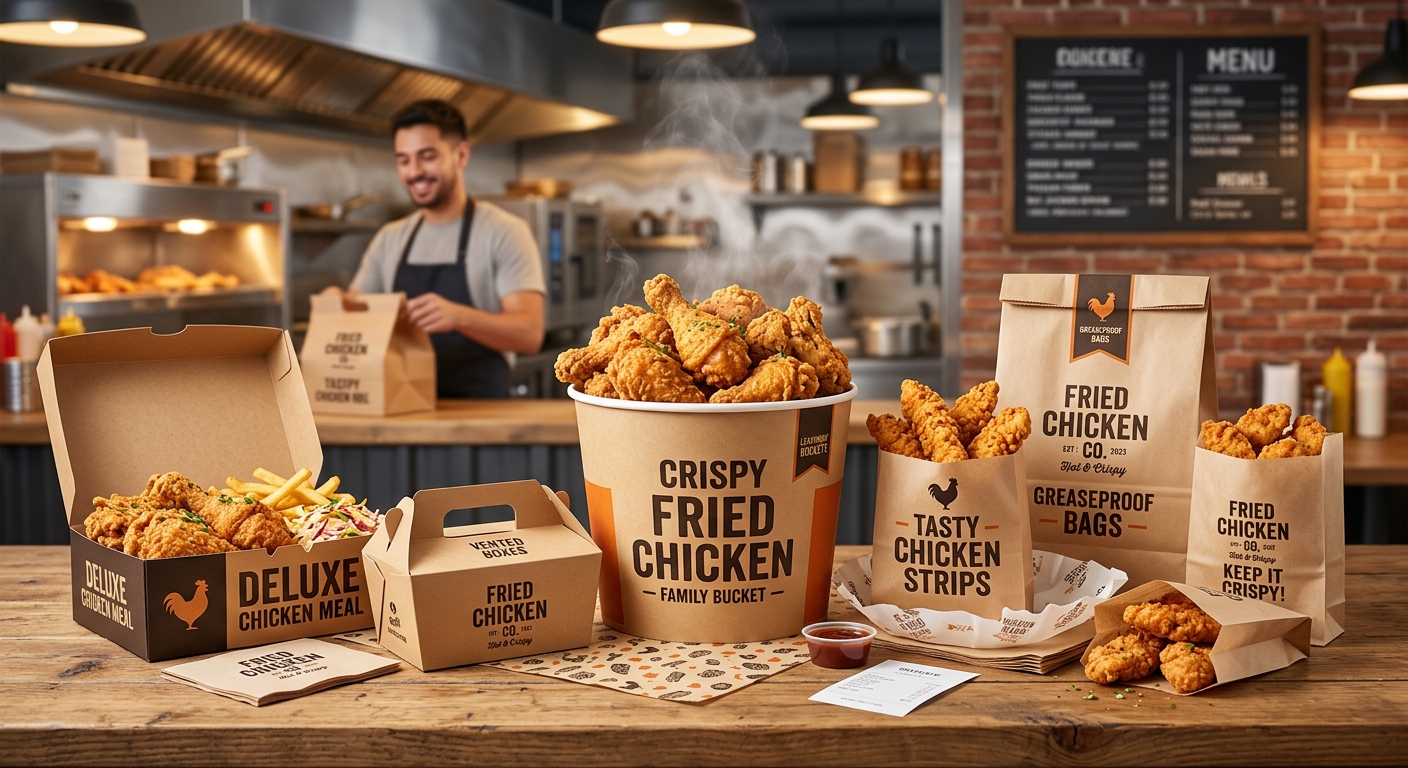
- Crash-Lock Bottom (Auto-Bottom): The bottom of the box automatically locks into place when the box is popped open. This is the fastest option for high-volume kitchens.
- Tuck Top: A standard closure where the top flap tucks into the box. It is secure and presents a clean look.
- Gable Top (Barn Box): Features a handle built into the top structure. This eliminates the need for an extra plastic bag, making it a favorite for takeaway meals.
Sizing Guide: Matching Packaging to Menu Items
Selecting the correct size reduces waste and prevents the product from tumbling inside the box during delivery. Below is a guide to common industry sizes and their applications.
1. The Snack Box (1-2 Pieces)
Designed for individual portions, sides, or kids’ meals.
Typical Dimensions: 150 x 100 x 50 mm
Usage: Wings, tenders, nuggets, or a single drumstick with fries.
2. The Standard Meal Box (3-5 Pieces)
The workhorse of the fried chicken industry. Fits a standard lunch combo.
Typical Dimensions: 180 x 120 x 70 mm
Usage: Quarter chicken meals, burger and chips combos.
3. The Family Dinner Box (8-12 Pieces)
Requires heavier grade board or corrugated material to support the weight.
Typical Dimensions: 220 x 160 x 100 mm
Usage: Whole chicken cuts, family sharing packs.
4. The Party Bucket
Cylindrical or tapered square buckets are iconic for fried chicken. They are excellent for stacking and sharing.
Capacity: 64oz to 170oz options.
Usage: Large parties, 12+ pieces, catering.
Customization & Branding Strategies
In the age of social media, your packaging is your most visible marketing asset. Unboxing videos and Instagram photos rely on visually appealing packaging. Manufacturers utilize several printing technologies to achieve this.
Offset Printing (Lithography)
Offset printing is the standard for high-quality, photo-realistic imagery. It involves transferring ink from a plate to a rubber blanket, then to the paper.
- Advantages: Superior image quality, precise color matching (CMYK + PMS), cost-effective for large runs.
- Best For: Complex designs, photographic backgrounds, and gradients.
Flexographic Printing
Flexo uses flexible relief plates and is often used for simpler designs or very high-volume runs, particularly on corrugated board or uncoated kraft.
- Advantages: Fast production speeds, lower plate costs than offset (sometimes), works well on rougher surfaces.
- Best For: Simple logos, patterns, and solid colors.
Finishing Touches
Beyond ink, special finishes can elevate the perceived value of the product:
- Spot UV: A glossy coating applied to specific areas (like a logo) to make them pop against a matte background.
- Embossing/Debossing: Creating a raised or recessed texture for a tactile experience.
- Hot Foil Stamping: Adding metallic gold or silver elements for a premium look.
Supply Chain & Logistics for Bulk Buyers
For B2B buyers, the logistics of packaging are as important as the product itself. When you plan your order, consider storage, transport, and lead times.
Flat-Packed vs. Pre-Formed
Most fried chicken boxes are shipped flat (knocked down). This significantly reduces shipping volume and costs. A pallet that holds 500 pre-formed buckets might hold 5,000 flat-packed boxes. This efficiency is crucial for international freight.
Storage Conditions
Paper is hygroscopic—it absorbs moisture from the air. Boxes should be stored in a cool, dry environment, off the ground (on pallets), and away from direct sunlight to prevent warping or fading. High humidity can soften the board, affecting stacking strength.
Minimum Order Quantities (MOQ)
Custom manufacturing involves setup costs (making printing plates and cutting dies). Consequently, factories implement MOQs.
Typical MOQ: 10,000 to 30,000 units for custom printed boxes.
Note: Higher volumes dramatically reduce the unit cost due to economies of scale.
Sustainability: Balancing Performance and Ecology
Environmental regulations and consumer preferences are shifting towards sustainable packaging. However, fried chicken packaging faces a specific hurdle: grease.
The Recycling Challenge
Standard PE-lined boxes are recyclable, but they require specialized facilities to separate the plastic liner from the paper fibers. In many regions, these end up in landfills.
Eco-Friendly Alternatives
- PLA (Polylactic Acid) Lining: A bioplastic derived from corn starch. It is biodegradable and compostable in industrial facilities.
- Water-Based Barrier Coatings: New technologies allow for plastic-free grease resistance, making the box fully repulpable in standard paper recycling streams.
- Unbleached Kraft: Choosing unbleached paper reduces the chemical load during manufacturing and signals sustainability to the consumer.
Manufacturing Quality Assurance
Reliable suppliers implement rigorous QA processes to ensure food safety and performance. When evaluating a manufacturer, inquire about their testing protocols.
Common Quality Tests
- Grease Resistance Test (Kit Test): Measures how long the surface resists oil penetration.
- Cobb Test: Measures water absorption of the paper sizing.
- Cross-Hatch Test: Ensures ink adhesion so that branding doesn’t flake off onto the food.
- Load Test: Simulates stacking weight to ensure boxes don’t crush during delivery.
Buying Guide: How to Source Custom Boxes
Ready to upgrade your packaging? Follow this checklist to streamline the procurement process.
1. Define Your Specifications
Before contacting a supplier, gather your requirements: dimensions (L x W x H), estimated monthly volume, number of colors in your design, and specific functional needs (e.g., microwave safe).
2. Request Samples
Never place a bulk order without seeing a physical sample. Check the material thickness, fold lines, and locking mechanisms. Put hot food in the sample to test grease resistance in real-world conditions.
3. Prepare Artwork
Ensure your design files are in vector format (AI, PDF, EPS) with fonts converted to outlines. This ensures the print quality is sharp and accurate.
4. Logistics Planning
Account for production lead times (typically 2-4 weeks) and shipping times (variable by location). Order well in advance of peak seasons.
For personalized assistance with specifications and pricing, contact our team directly.
Frequently Asked Questions (FAQ)
What is the best material for keeping fried chicken crispy?
A high-quality paperboard with adequate ventilation holes is best. While corrugated board retains heat well, without proper venting, it can cause sogginess. The balance between insulation and ventilation is key.
Can I print my logo on the inside of the box?
Yes, but it requires food-safe, odorless inks (often soy or water-based) and usually a food-grade coating over the print to prevent direct contact between the food and the ink pigments.
What is the difference between PE and PLA lining?
PE (Polyethylene) is a traditional plastic derived from petroleum; it is durable and cheap but harder to recycle. PLA (Polylactic Acid) is plant-based and compostable, offering a more sustainable end-of-life option, though often at a slightly higher cost.
Do you offer custom shapes for chicken boxes?
Yes, custom die-cutting allows for unique shapes, handles, and closure mechanisms. However, custom dies incur a one-time setup fee.
How do I determine the right size box for my menu?
The best method is to measure the physical volume of your food portion. We recommend arranging your food items (e.g., 4 pieces of chicken + fries) on a table, measuring the footprint and height, and adding 10-15mm of clearance on all sides.
Are these boxes microwave safe?
Boxes with standard PE linings are generally microwave safe for short durations (reheating). However, boxes with metallic foil stamping or certain metallic inks are not microwave safe.
Conclusion
Choosing the right fried chicken box is a balance of science, art, and logistics. It requires selecting materials that handle high temperatures and grease, designing structures that maintain food texture, and creating artwork that builds brand loyalty. By understanding the technical aspects of paper grades, coatings, and printing, buyers can make informed decisions that enhance their operational efficiency and customer satisfaction.
If you are looking for a reliable partner to supply high-quality, custom-printed food packaging, we are here to help. Request a quote today to discuss your project requirements and receive a tailored packaging solution.