

The Strategic Importance of High-Quality Fries Packaging
In the competitive landscape of Quick Service Restaurants (QSR) and fast-casual dining, the french fry is often the highest-margin item on the menu. However, its profitability relies heavily on the customer experience. A soggy, cold, or grease-stained serving can diminish brand perception instantly. This is where professional custom french fries boxes play a critical role.
For wholesale buyers, procurement managers, and restaurant owners, selecting the right packaging is not merely about holding the product; it is about thermal management, grease resistance, and brand visibility. The correct box structure ensures fries remain crispy by allowing steam to escape, while high-quality printing turns every customer walking down the street into a mobile billboard for your brand.
This guide provides a comprehensive technical overview of manufacturing specifications, material choices, and customization options to help you make informed purchasing decisions for bulk orders.
Anatomy of a High-Performance French Fries Box
Before diving into aesthetics, it is essential to understand the functional requirements of fries packaging. Unlike dry goods packaging, food service containers must withstand heat, moisture, and oil simultaneously.
1. Structural Integrity (Stiffness)
The box must be rigid enough to be held with one hand without collapsing, even when filled with hot, heavy product. This stiffness is determined by the paper grain direction and the grammage (GSM) of the material. A flimsy box frustrates customers and can lead to spills, increasing waste and cleaning costs.
2. Grease Resistance
Freshly fried potatoes carry significant surface oil. Without a proper barrier, this oil penetrates the paper fibers, causing unsightly dark spots on the exterior and weakening the box’s structure. High-quality food packaging boxes utilize polyethylene (PE) linings or specialized oil-proof coatings to prevent this migration.
3. Thermal Venting
Crispiness is a function of moisture management. If a fries box is sealed too tightly or lacks an open top, steam from the hot potatoes condenses back into water, making the fries soggy. The classic “scoop” design is engineered specifically to maximize ventilation while providing a backboard for scooping the product efficiently.
Material Specifications: Choosing the Right Substrate
The base material defines the cost, look, and performance of your packaging. In the wholesale market, three primary materials dominate the category.
Food Grade White Cardboard (Ivory Board / FBB)
Folding Box Board (FBB), often referred to as Ivory Board, is the standard for premium fast-food chains. It features a multi-ply construction with a coated top surface and a white or cream back.
- Pros: Excellent printability (colors appear vibrant), smooth surface, hygienic appearance, high stiffness-to-weight ratio.
- Typical GSM: 210gsm to 300gsm.
- Best For: Brands requiring high-definition graphics, photographic printing, or a clean, sanitary look.
Natural Kraft Paper (Brown or White)
Kraft paper is produced from chemical pulp produced in the kraft process. It is known for its high elasticity and high tear resistance.
- Pros: Eco-friendly aesthetic, high strength, natural look that appeals to organic or artisanal brands.
- Typical GSM: 230gsm to 337gsm.
- Best For: “Farm-to-table” concepts, eco-conscious brands, and heavy loaded fries where tear resistance is key.
Corrugated Board (Micro-Flute)
For exceptionally large portions or delivery-specific packaging, micro-flute corrugated board (E-flute or F-flute) offers superior insulation.
- Pros: Best thermal retention, extremely rigid, prevents hand burns from hot contents.
- Cons: Higher unit cost, bulkier to store.
- Best For: Family-size servings, delivery-heavy business models, or heavy toppings (e.g., chili cheese fries).
Coatings and Linings: Managing Grease and Moisture
The raw paper material is rarely used alone for fried foods. A barrier layer is applied to ensure performance.
PE (Polyethylene) Coating
This is the industry standard. A thin layer of PE plastic is extruded onto the paperboard. It provides a 100% barrier against grease and water.
- Single PE (1PE): Coated on the inside only. Sufficient for most dine-in and takeaway scoop cups.
- Double PE (2PE): Coated on both inside and outside. Used when the box might be stored in a humid environment or if condensation is expected on the outside (rare for fries, common for cold cups).
Aqueous Dispersion Coating
For brands strictly focusing on plastic-free reduction, water-based (aqueous) coatings offer grease resistance without a film layer. While more environmentally favored in some jurisdictions, they may have lower resistance thresholds compared to PE linings for extremely oily products.
Design Styles and Structural Options
Selecting the right shape depends on your serving method and portion control strategy.
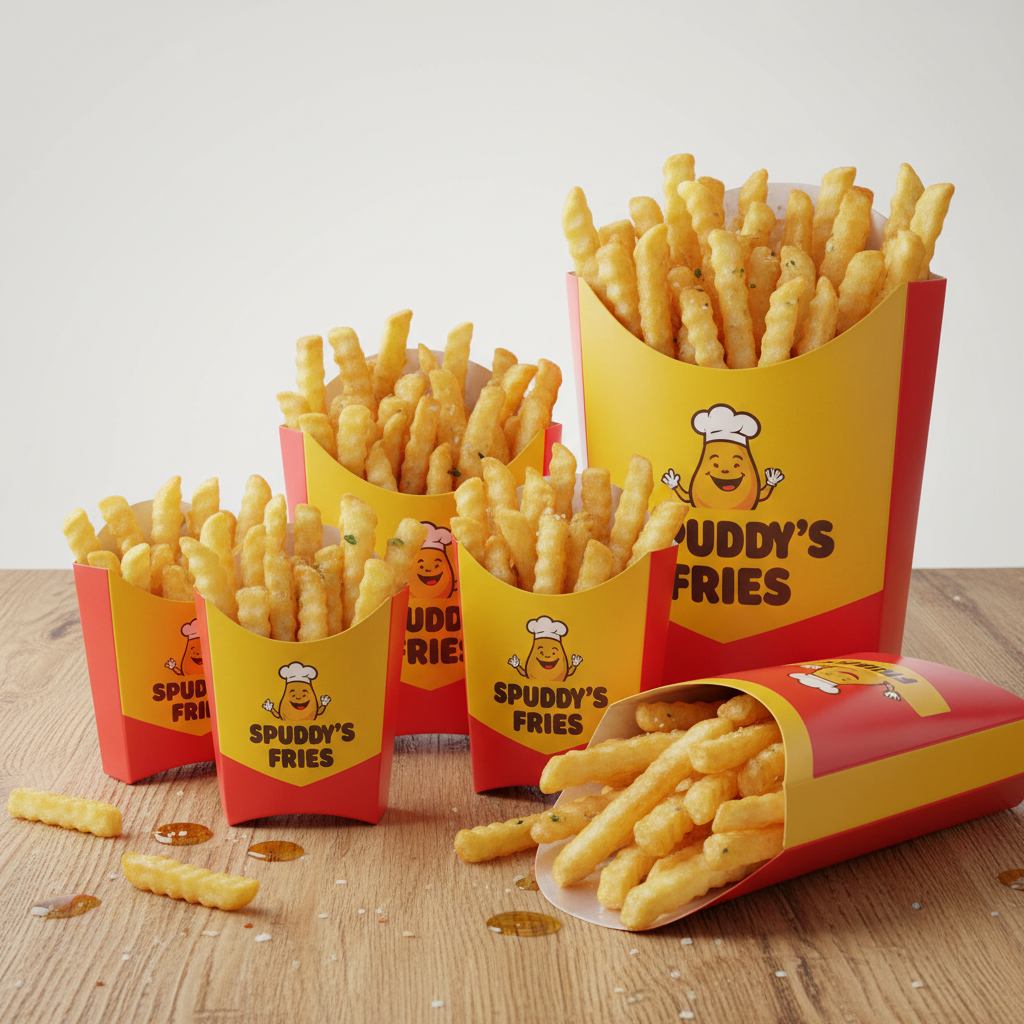
The Classic Scoop Cup
The iconic shape with a lower front and higher back.
- Advantages: Easy to fill (scoop directly from the warmer), stacks efficiently, displays the product appetizingly.
- Usage: High-volume QSRs, drive-thrus.
The Rectangular Tub / Tray
A simple open-top tray.
- Advantages: Stable on a tray, easier to eat from with a fork.
- Usage: Loaded fries, poutine, sit-down casual dining.
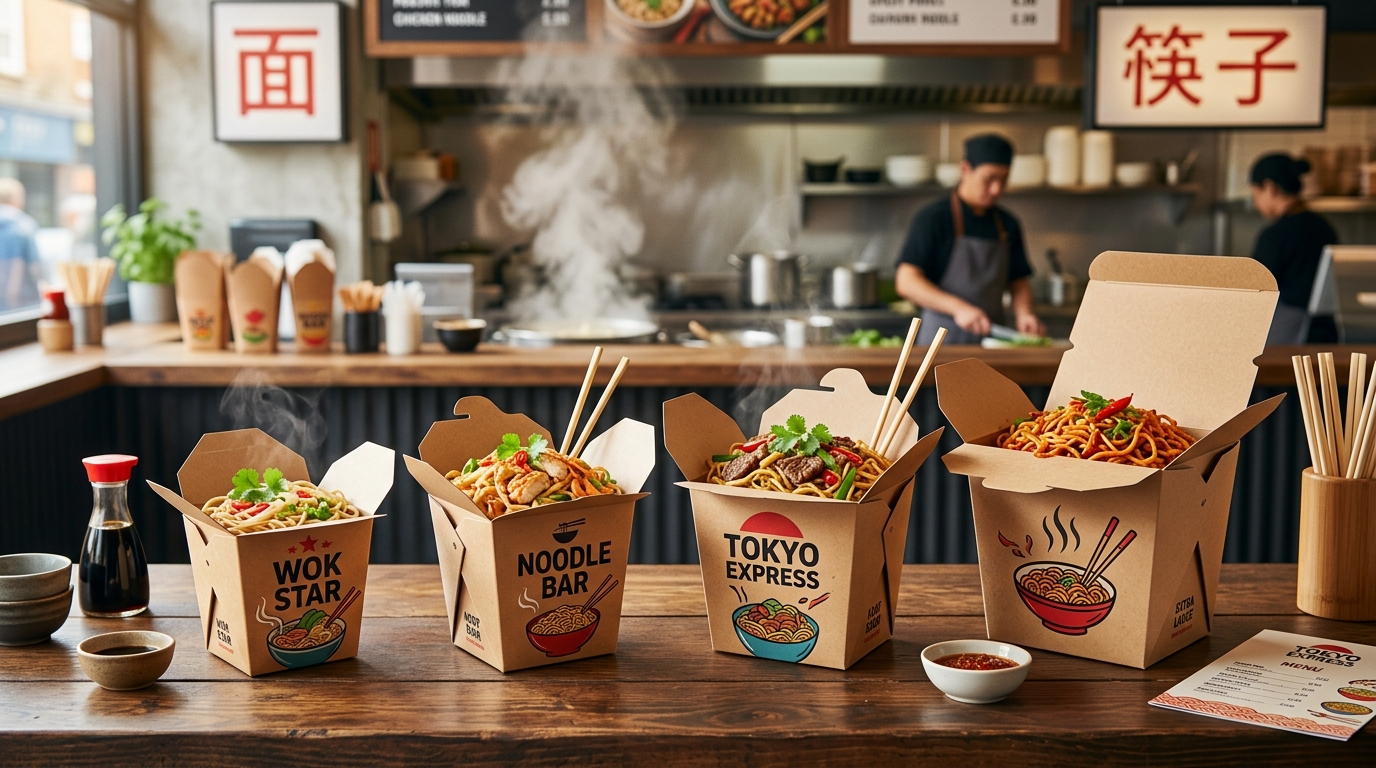
The Closed Carton (with Vents)
A box with a fold-over lid.
- Advantages: Protects food during delivery, retains heat longer.
- Critical Feature: Must have die-cut ventilation holes to prevent sogginess.
- Usage: Food delivery apps, takeaway orders.
The Cone
Often accompanied by a dipping sauce pocket.
- Advantages: distinctive look, easy to hold while walking.
- Usage: Street food festivals, food trucks, European-style friteries.
Sizing and Capacity Guide
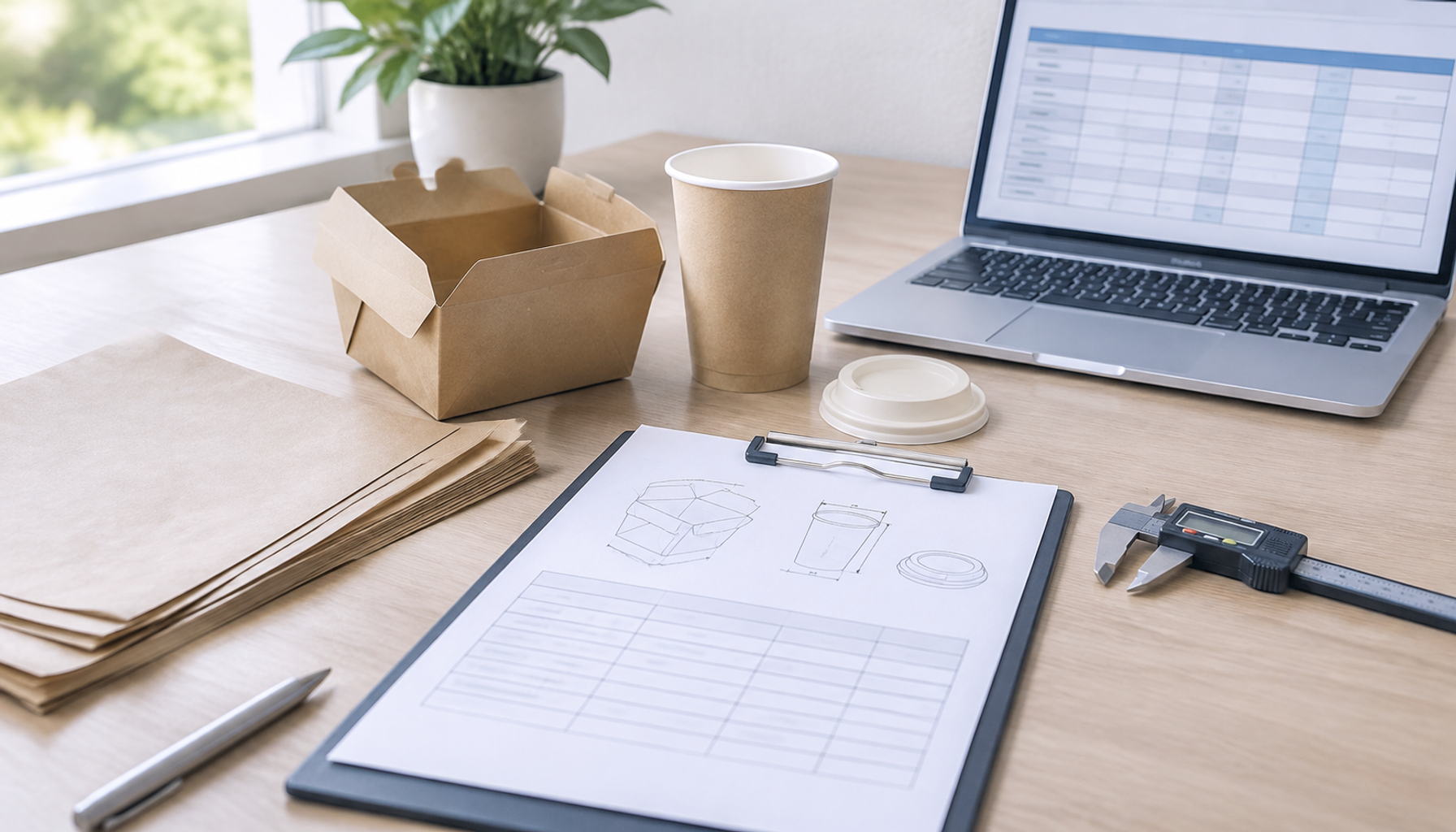
Wholesale ordering requires precise specification of dimensions. “Small” or “Large” varies by region and brand. We recommend defining size by fluid ounces (volumetric) or gram weight of the product.
| Size Designation | Approx. Capacity (oz) | Typical Dimensions (H x W x D) | Best Use Case |
|---|---|---|---|
| Small / Kids | 3 – 4 oz | Standard Scoop | Kids meals, value menu sides. |
| Medium / Regular | 5 – 6 oz | Standard Scoop | Standard combo meal side. |
| Large | 7 – 8 oz | Tall Scoop | Up-sell items, shareable portions. |
| King / Family | 10+ oz | Wide Tub | Sharing platters, loaded fries. |
Note: Dimensions can be customized to the millimeter to fit specific tray liners or bags.
Printing and Brand Customization
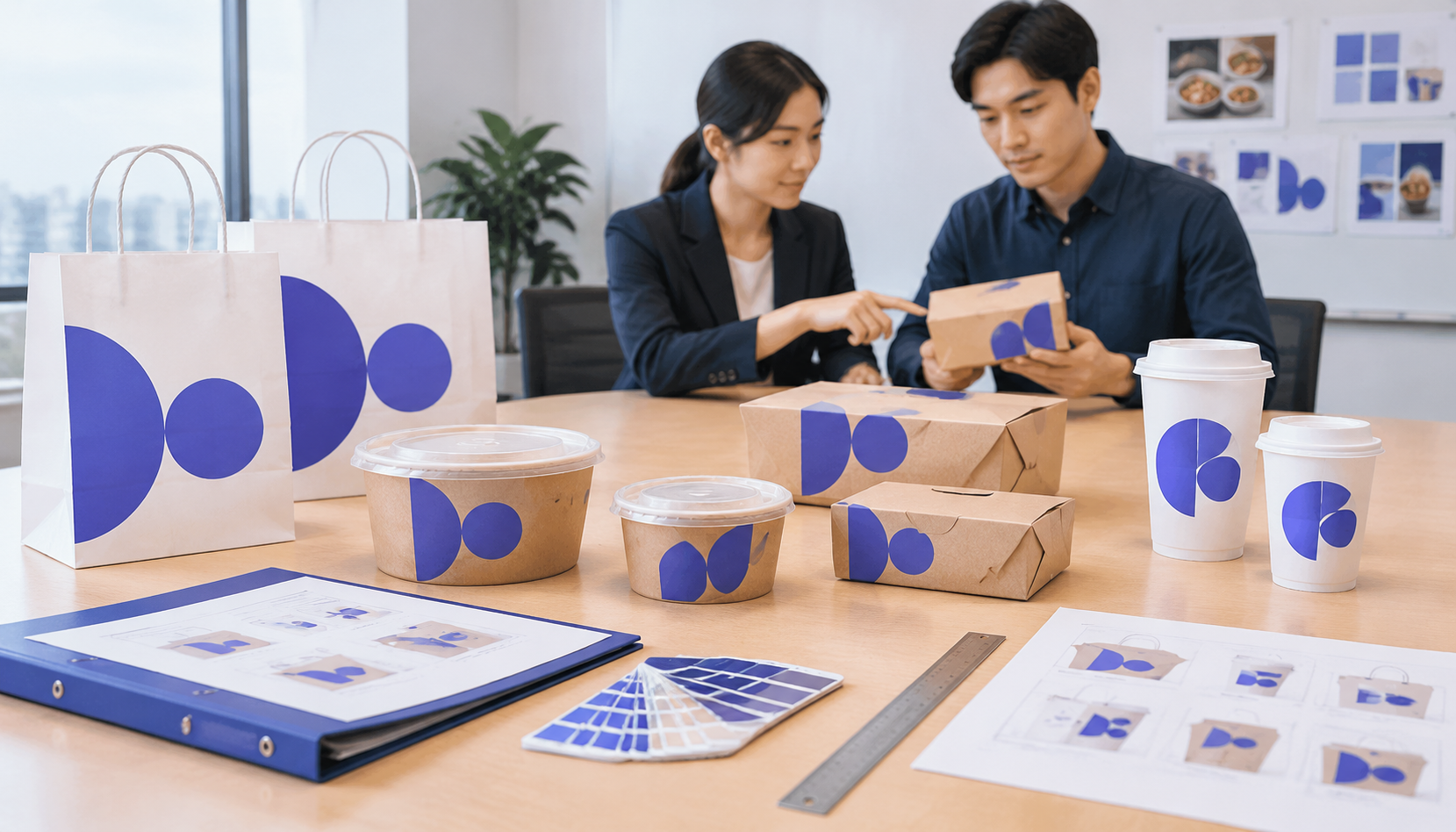
Your packaging is a marketing tool. High-quality printing ensures your logo is recognizable.
Printing Technologies
- Offset Printing: The gold standard for high-volume paperboard packaging. It offers the highest resolution, sharpest text, and accurate color reproduction. It is ideal for complex artwork with gradients or photographs.
- Flexographic Printing: Often used for simpler designs or kraft paper. It is cost-effective for very large runs but has lower resolution than offset.
Color Management
- CMYK (Process Color): Used for full-color images.
- Pantone (PMS): Essential for maintaining brand consistency. If your brand red is Pantone 186C, specifying this ensures the boxes match your cups and napkins exactly.
Finishing Options
- Gloss Varnish: Enhances colors and adds a shiny, protective layer.
- Matte Varnish: Provides a sophisticated, non-reflective finish.
- Spot UV: Highlights specific areas (like a logo) with gloss against a matte background.
Wholesale Buying Guide: MOQ, Lead Times, and Logistics
When you are ready to order, understanding the logistics of wholesale packaging will help streamline the process. You can learn more about our workflow on our how to order page.
Minimum Order Quantity (MOQ)
Custom manufacturing involves setup costs (making printing plates, setting up die-cutters). Therefore, MOQs are necessary to amortize these costs.
- Typical MOQ: Often starts around 10,000 to 30,000 units for fully custom sizes and print.
- Price Breaks: Unit costs drop significantly as volume increases (e.g., 50,000 vs 100,000 units) due to production efficiencies.
Artwork Preparation
To avoid delays, ensure your design team provides:
- Vector Files: AI, PDF, or EPS formats.
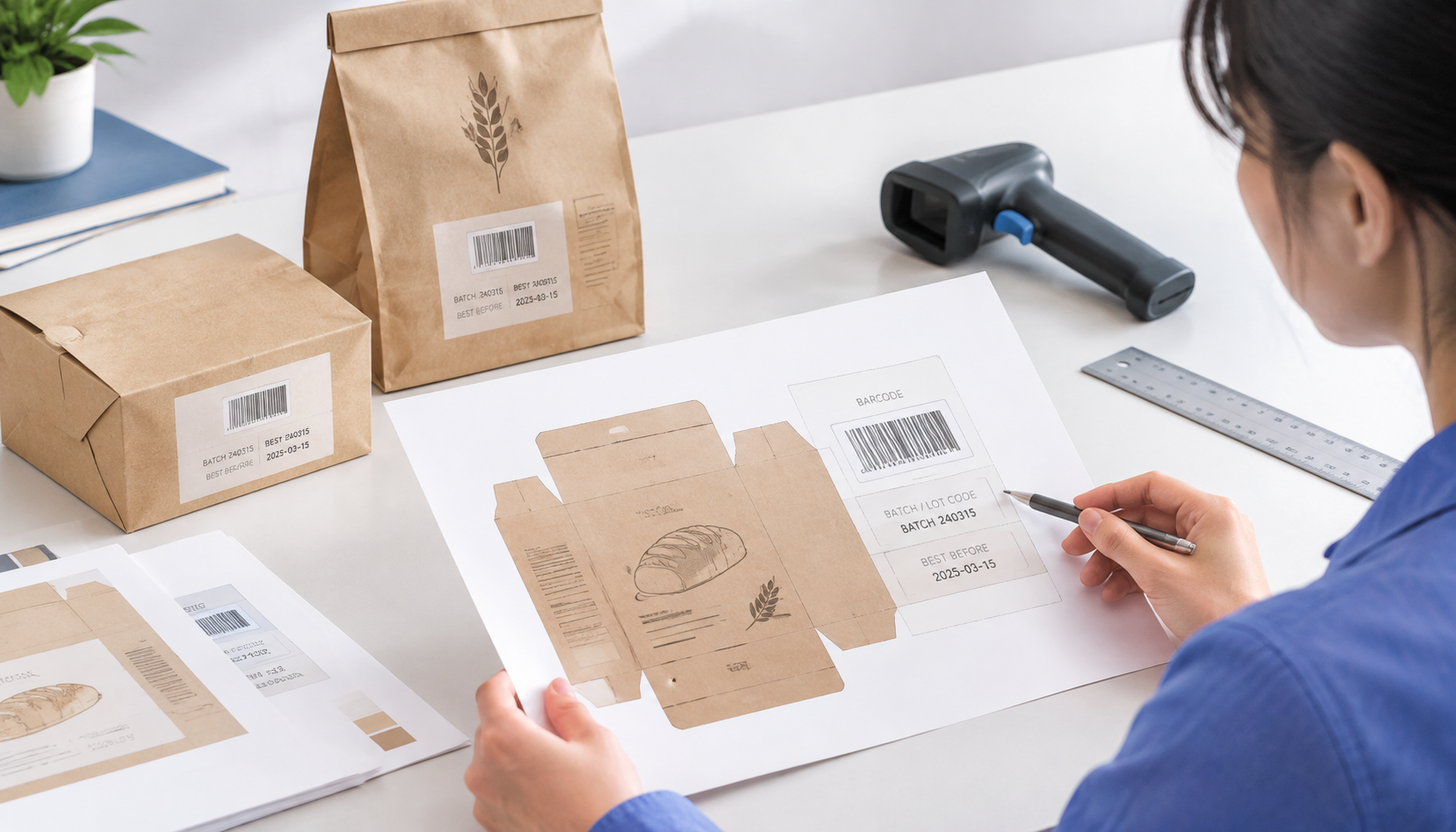
- Dielines: Request the dieline template from the manufacturer before designing.
- Bleed: Ensure artwork extends at least 3mm beyond the cut line.
- Outlined Fonts: Convert all text to curves/outlines to prevent font missing errors.
Shipping and Storage
French fries boxes are shipped flat-packed (knocked down). This is a massive logistical advantage, as thousands of units can fit on a single pallet, reducing freight costs. Ensure your warehouse has a cool, dry area for storage to prevent paper warping due to humidity.
Quality Assurance and Food Safety
In the food industry, compliance is non-negotiable. When sourcing wholesale boxes, verify the following:
- Food Grade Certification: The paperboard must be certified for direct food contact.
- Ink Safety: Inks used must be food-safe and low-migration, ensuring no harmful chemicals transfer to the food, especially under heat.
- Odor Free: High-quality manufacturing ensures no residual solvent smell from the printing process.
Common Pitfalls to Avoid
- Ignoring the Glue Flap: Ensure the glue used is heat-resistant. Cheap glues can melt under the heat of fresh fries, causing the box to pop open.
- Overlooking Ventilation: For delivery boxes, insufficient venting leads to customer complaints about soggy food.
- Wrong Paper Weight: Using 210gsm paper for a large 8oz portion may result in the box buckling. Always test samples with your actual product weight.
Frequently Asked Questions (FAQ)
1. Can I get a sample before placing a bulk order?
Yes, sampling is a standard part of the wholesale process. You can typically request a plain dummy sample to check size and material thickness, or a digital print proof to verify artwork placement. Contact us to arrange a sample.
2. What is the difference between PE lining and Clay coating?
PE lining is a plastic film that provides a total moisture/grease barrier. Clay coating improves the printing surface of the paper but does not offer the same level of grease resistance as PE. For fries, PE or a specialized grease-proof treatment is recommended.
3. Are these boxes recyclable?
Kraft and paperboard boxes are generally recyclable. However, if they are lined with PE plastic, they may require specialized recycling facilities depending on local regulations. PLA-lined or aqueous-coated options are available for stricter compostability requirements.
4. How long is the production lead time?
After artwork approval, production typically takes 2-4 weeks depending on the order volume and factory schedule. Shipping time is additional and depends on your location and freight method (sea vs. air).
5. Can you print on the inside of the box?
Printing on the inside is possible but requires food-safe inks and often a protective coating over the print to prevent direct food contact with the ink. This is a premium feature that adds to the cost.
6. Do you offer custom shapes?
Yes, custom die-cutting allows for unique shapes, such as built-in sauce holders or specific structural designs to match your branding. This requires a one-time tooling fee for the new die mold.
7. How do I calculate the volume I need?
The best method is to physically test your portion size. We can provide dielines or samples for you to fill with your specific cut of fries (shoestring, crinkle, wedges) to ensure the fit is perfect.
Ready to Upgrade Your Packaging?
Your packaging is the final touchpoint between your kitchen and your customer. High-quality, custom-printed french fries boxes ensure your product stays hot, crispy, and visually appealing. Whether you need a standard scoop cup or a custom-engineered delivery box, YBJ Packing provides professional manufacturing solutions tailored to the food service industry.
Request a quote today to discuss your specifications, get current pricing, and start your custom packaging journey.