

For coffee shop owners, procurement managers, and beverage distributors, selecting the right disposable cup is a balance between budget, functionality, and brand perception. The choice between double wall and single wall paper cups impacts not just the cost per unit, but also customer safety, operational speed, and storage efficiency.
While single wall cups are the industry standard for general use, double wall cups offer distinct advantages for high-temperature beverages. This guide compares the technical specifications, insulation properties, and cost implications of both options to help you make an informed sourcing decision.
Understanding the Structural Differences
Before analyzing costs and performance, it is important to define the manufacturing differences that dictate how these cups perform in a commercial environment.
Single Wall Cups
Single wall cups are constructed from a single layer of paperboard. To prevent leaking and maintain structural integrity, the interior is typically coated with a thin layer of Polyethylene (PE) or, for eco-focused lines, Polylactic Acid (PLA).
- Key Characteristic: Lightweight and compact.
- Thermal Conductivity: High. Heat transfers quickly from the beverage to the customer’s hand.
- Common Usage: Warm beverages (latte, cappuccino), cold drinks, or hot drinks served with a cardboard sleeve (clutch).
Double Wall Cups
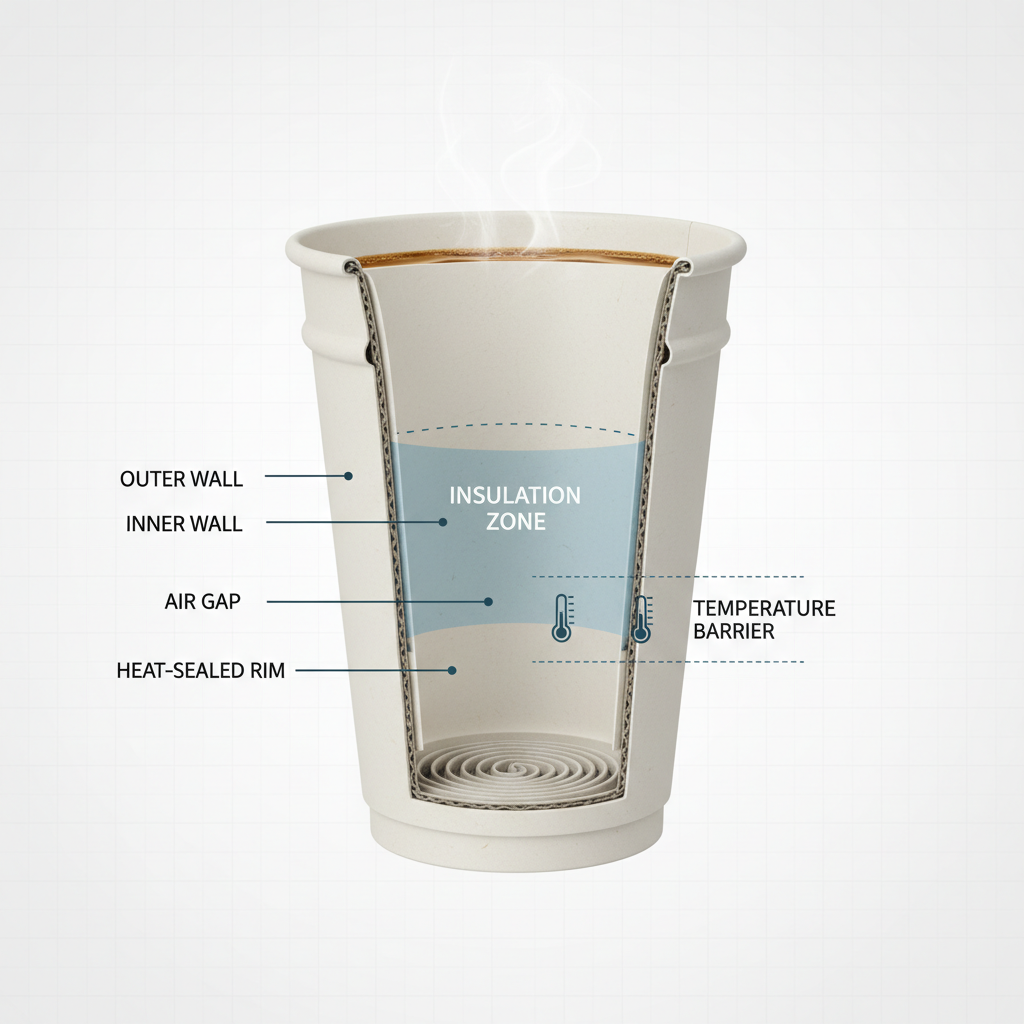
Double wall cups feature an inner cup (similar to a single wall) wrapped with an additional outer layer of paperboard. Crucially, manufacturers leave a small air gap between these two layers.
- Key Characteristic: Built-in insulation mechanism.
- Thermal Conductivity: Low. The air gap acts as a thermal barrier, trapping heat inside the cup while keeping the outer wall cool to the touch.
- Common Usage: Very hot beverages (black coffee, tea, Americano) where sleeves are undesirable.
Insulation and Heat Retention Comparison
The primary performance metric for hot beverage packaging is thermal insulation.
The "Sleeve" Factor
Single wall cups generally cannot be held comfortably if the beverage temperature exceeds 85°C (185°F) without external protection. This necessitates the use of a cardboard sleeve. While effective, sleeves introduce operational friction:
- Inventory Management: You must source, store, and track two SKUs (cup and sleeve) instead of one.
- Service Speed: Baristas or customers must take an extra second to apply the sleeve, which adds up during peak rush hours.
Double wall cups eliminate the need for sleeves entirely. The dual-layer construction provides sufficient thermal resistance to hold boiling water safely. This simplifies inventory and streamlines the serving process.
Cost Analysis: Unit Price vs. Total Cost of Ownership
When sourcing wholesale paper cups, the upfront unit price is often the deciding factor, but it can be misleading.
1. Upfront Manufacturing Costs
Single wall cups use less material and are faster to manufacture, making them the most economical option on a per-unit basis. Double wall cups require more paperboard and a more complex forming process, typically resulting in a higher unit cost (often 20–30% higher depending on specifications).
2. Hidden Costs of Single Wall Cups
If your menu requires sleeves for single wall cups, the cost calculation changes.
Formula: Cost of Single Wall Cup + Cost of Sleeve = Total Packaging Cost.
frequently, the combined cost of a single wall cup plus a custom-printed sleeve exceeds the cost of a standalone double wall cup. Furthermore, double wall cups offer a premium feel that can justify a higher retail price point for the beverage, potentially offsetting the procurement cost.
Printability and Branding Opportunities
Your cup is a mobile billboard. The structural differences between the two cup types affect print quality and branding impact.
- Single Wall: Due to the forming process, single wall cups are printed directly on the structural paperboard. While high-quality Flexo or Offset printing is standard, the heat from the drink can sometimes impact how the cup feels in the hand, distracting from the brand experience.
- Double Wall: The outer wall is strictly aesthetic and structural; it does not come into direct contact with the liquid. This allows for a smooth, uninterrupted print surface. Additionally, the extra thickness gives the cup a rigid, robust feel that consumers often associate with premium quality.
Logistics: Stacking and Storage
For distributors and coffee shops with limited storage space, logistics is a key consideration.
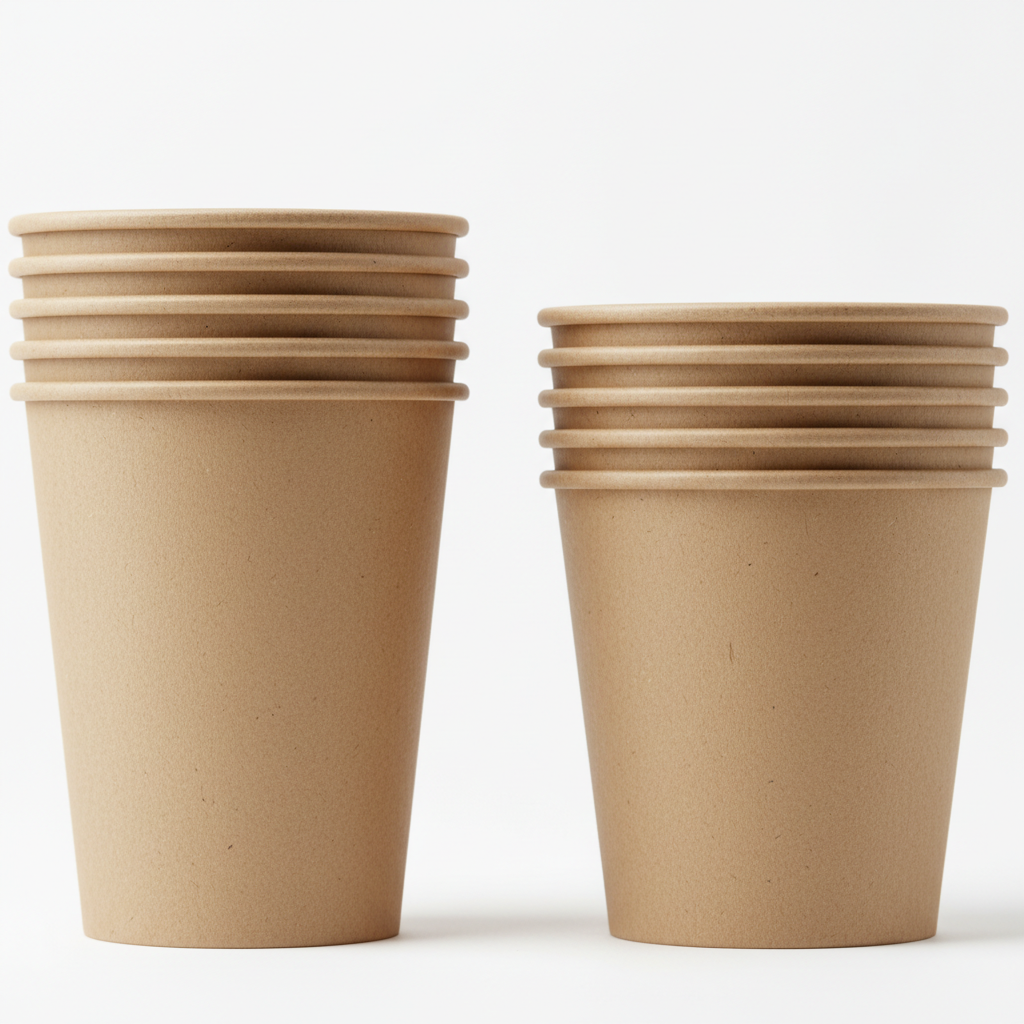
- Nesting Density: Single wall cups have thinner walls, allowing them to stack (nest) tighter. You can typically fit 30–40% more single wall cups in a standard shipping carton compared to double wall cups.
- Shipping Costs: Because double wall cups are bulkier, shipping costs per 1,000 units are generally higher. Warehousing requirements will also be higher for the same quantity of inventory.
Decision Matrix: Which Cup Should You Choose?
To summarize the trade-offs, use this guide based on your specific business model:
| Feature | Single Wall Cup | Double Wall Cup |
|---|---|---|
| Best For | Lattes, cappuccinos, cold drinks, budget-conscious operations. | Black coffee, tea, premium brands, minimalist service (no sleeves). |
| Insulation | Low (requires sleeve for high heat). | High (no sleeve required). |
| Cost Per Unit | Low. | Medium to High. |
| Storage Efficiency | High (compact stacking). | Lower (bulkier stacking). |
| Environmental Note | Uses less paper material. | Uses more paper, but eliminates sleeve waste. |
Buying Guide: Specifications to Look For
When requesting a quote from a manufacturer like YBJ Packing, being specific ensures you get the right product for your needs.
Paper Weight (GSM)
Paper thickness is measured in Grams per Square Meter (GSM).
Typical Range:
– Single Wall: 190gsm to 350gsm (plus PE coating).
– Double Wall: Inner layer ~250gsm + Outer layer ~250gsm.
Coating Options
Ensure the manufacturer offers the lining that fits your sustainability goals.
PE (Polyethylene): Standard plastic lining, excellent heat sealing.
PLA (Polylactic Acid): Plant-based lining, biodegradable/compostable options available.
Frequently Asked Questions (FAQs)
Can I use single wall cups for hot tea?
Yes, but because tea is served at near-boiling temperatures, the cup will become too hot to hold immediately. You will almost certainly need a protective sleeve or another cup (double-cupping) to ensure customer safety.
Are double wall cups recyclable?
Recyclability depends largely on the lining (PE vs. PLA) and local recycling facilities. Double wall cups use more paper fiber, which is valuable, but the separation of lining and paper remains the main challenge for standard recycling streams.
What is the Minimum Order Quantity (MOQ) for custom printing?
MOQs vary by manufacturer but typically start around 10,000 to 30,000 units for custom flexo printing. Digital printing options may allow for smaller runs but at a higher unit cost.
Do double wall cups affect the taste of the coffee?
No. Both cup types use food-grade paperboard and linings that are odorless and tasteless. The primary difference is the tactile experience and temperature retention.
Which cup is better for cold drinks?
Single wall cups are generally preferred for cold drinks. Double wall insulation is unnecessary for cold beverages unless you specifically want to prevent condensation on the outside of the cup.
Conclusion
Choosing between double wall and single wall paper cups ultimately depends on your menu, your budget, and your brand image. If you serve high-heat beverages like Americanos and teas and want to offer a premium, sleeve-free experience, double wall cups are the superior choice. If you primarily serve milk-based drinks or are optimizing for storage density and lowest unit cost, single wall cups remain the industry workhorse.
At YBJ Packing, we specialize in high-quality paper packaging solutions tailored to your operational needs.
Ready to upgrade your beverage packaging?
Request a Quote / Get a Sample today to explore our range of custom-printed single and double wall cups.