

In the competitive beverage industry, packaging plays a pivotal role in customer experience. While the cup itself is the vessel, the cup sleeve (often called a coffee clutch or zarf) provides the critical interface between the hot beverage and the consumer’s hand. For B2B buyers—ranging from coffee shop chains to corporate office managers—understanding the technical and marketing value of cup sleeves is essential for making cost-effective procurement decisions.
Cup sleeves are not merely disposable accessories; they are engineered safety devices and high-visibility marketing tools. This guide explores why corrugated sleeves are necessary for serving hot beverages safely and how they serve as a flexible, low-cost branding medium.
The Engineering Behind Heat Protection
The primary function of a cup sleeve is thermal insulation. Single-wall paper cups, while economical and eco-friendly, have high thermal conductivity. When filled with coffee or tea at standard serving temperatures (often between 70°C and 85°C), the exterior surface becomes too hot to hold comfortably for extended periods.
Corrugated Structure and Insulation
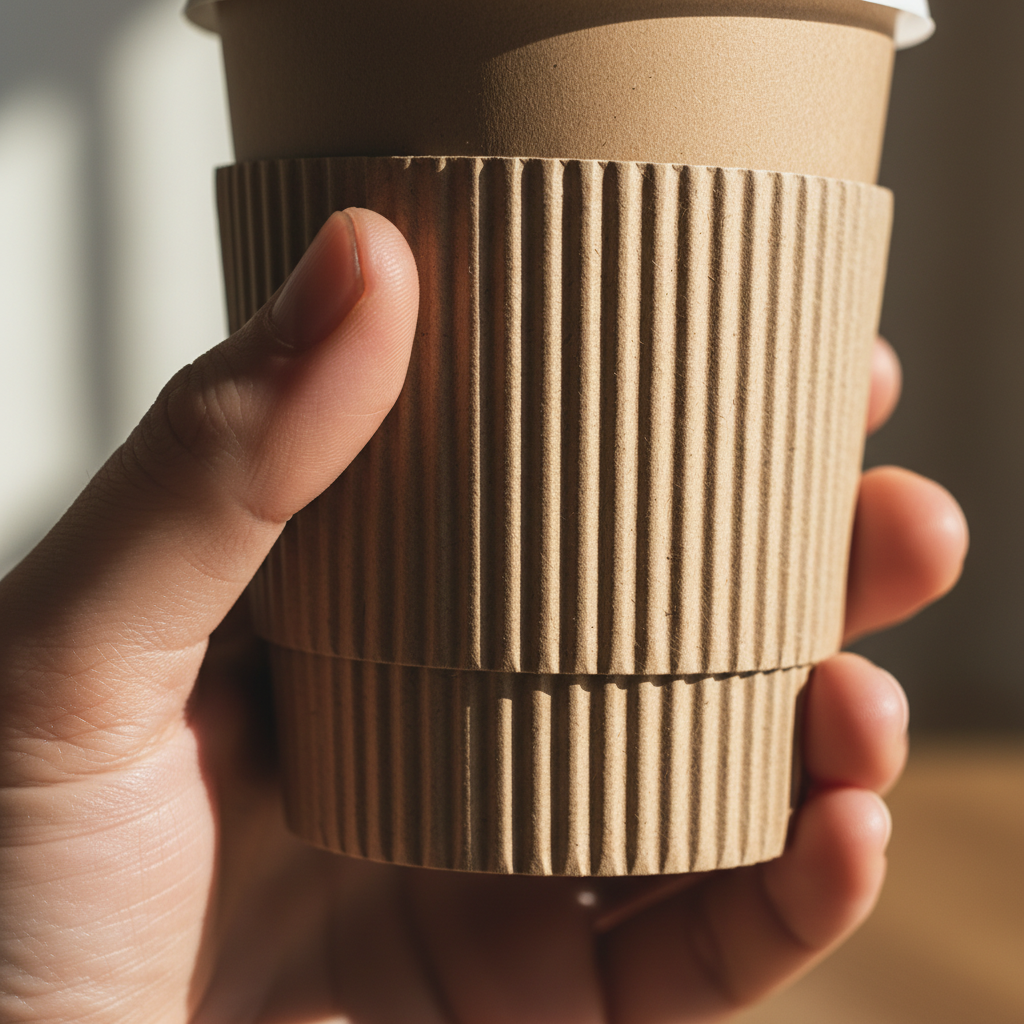
Most high-quality cup sleeves utilize a corrugated paperboard construction. This design features a fluted inner layer sandwiched between two flat liners (or one liner and the cup surface). This structure creates air pockets between the heat source and the hand.
Air is a poor conductor of heat. By trapping air within the flutes, the sleeve significantly slows the rate of heat transfer. This allows the consumer to hold a very hot drink without discomfort, eliminating the need for “double-cupping,” which doubles packaging costs and waste.
Grip Stability and Safety
Beyond heat resistance, sleeves enhance grip. Smooth paper cups can become slippery, especially if there is any condensation or if the user is wearing gloves. The textured surface of a corrugated sleeve increases friction, reducing the likelihood of spills. For businesses, this is a proactive measure to mitigate the risk of accidental burns and potential liability issues associated with hot liquid spills.
Turning Safety into Branding
While safety is the operational requirement, branding is the strategic opportunity. Cup sleeves offer a prime real estate area that travels with the customer—from the counter, to the street, to the office desk. They turn every customer into a walking advertisement.
Cost-Effective Seasonal Promotions
Customizing the actual paper cup can be expensive and often requires high Minimum Order Quantities (MOQs) and long lead times. Cup sleeves offer a more agile alternative. Because they are smaller and produced separately, they are often cheaper to print and easier to switch out.
Brands can run short-term campaigns—such as holiday promotions, seasonal flavors, or QR code contests—by simply changing the sleeve design while keeping the base cup inventory standard. This allows for rapid marketing pivots without the risk of obsolete cup inventory.
High-Impact Visuals
Modern printing technologies allow for vibrant, full-color printing on sleeves. Whether choosing a rustic natural Kraft look with a simple black logo or a glossy, high-definition print, the sleeve is the first thing a customer sees when interacting with their drink. Consistent branding here reinforces perceived quality and professionalism.
Technical Considerations for Buyers
When sourcing cup sleeves, procurement teams should evaluate several technical specifications to ensure compatibility and performance.
Material Options: Kraft vs. White
- Natural Kraft: Offers a rustic, eco-friendly aesthetic. It is highly popular for organic or artisan brands. The brown background affects color rendering, so bold, dark inks work best.
- White Board: Provides a neutral canvas for bright, colorful graphics. If your brand colors require precise matching (Pantone matching), white board is generally the superior choice.
Sizing and Fit
A loose sleeve is a safety hazard. Sleeves are typically die-cut to fit specific cup tapers. Common sizes include:
- Standard Fit: Usually fits 12oz, 16oz, and 20oz cups.
- Small Fit: Designed for 8oz or 10oz cups.
It is crucial to request samples to test the fit against your specific cup stock, as cup diameters can vary slightly between manufacturers.
Glue Quality
The adhesive used to bond the sleeve ends must withstand high heat. Low-quality glues can soften when the sleeve warms up, causing it to pop open. Ensure your supplier uses heat-resistant, food-safe adhesives to maintain structural integrity.
Manufacturing and Sustainability
Sustainability is a growing priority in food service packaging. Corrugated sleeves are predominantly made from paper pulp, a renewable resource. Many suppliers offer sleeves made from recycled content or certified sustainable forestry sources.
Furthermore, because sleeves are easily separable from the cup (which may be lined with PE or PLA), they are often easier to recycle in standard paper streams, provided they are not heavily contaminated with liquid.
Buying Guide: Key Questions to Ask
Before placing a bulk order, consider the following:
- MOQ: What is the minimum run for custom printing? (Sleeves often have lower MOQs than cups).
- Lead Time: How long does production take after artwork approval?
- Flute Size: Is the corrugation E-flute (finer) or larger? Micro-flutes offer a smoother surface for printing while maintaining insulation.
- Packaging: How are the sleeves packed? Efficient nesting saves on shipping volume and storage space.
Frequently Asked Questions
Do I need sleeves if I use double-wall cups?
Generally, double-wall cups provide sufficient insulation on their own. However, some brands still use sleeves on double-wall cups for purely aesthetic reasons or for extremely hot beverages (like tea) where extra protection is desired.
Can cup sleeves be recycled?
Yes, most paper cup sleeves are recyclable. Since they typically do not have plastic liners (unlike the cups themselves), they can go into standard paper recycling bins.
What is the difference between smooth and corrugated sleeves?
Corrugated sleeves have a textured, fluted interior that provides superior heat insulation through air pockets. Smooth sleeves (often called clutch sleeves) rely on the thickness of the board alone and generally offer less heat protection but a smoother print surface.
How do I ensure the sleeve fits my cup?
Cup tapers vary. Always send a sample of your cup to the packaging manufacturer or request sleeve samples to test on your inventory before committing to a large order.
Secure Your Brand and Your Customers
Cup sleeves are a small investment that delivers significant returns in safety and brand recognition. Whether you need standard kraft sleeves for a coffee chain or custom-printed sleeves for a corporate event, choosing the right specification is key.
Ready to enhance your beverage packaging? Contact our team today to request a quote or get samples of our premium corrugated cup sleeves.